
May 9, 2026
Security Guard Services Los Angeles: Top Providers & Costs
Smash-and-grab headlines, overnight construction thefts, and crowded events have many Los Angeles property owners realizing a simple camera system is not enough. When something goes wrong at a storefront on Melrose, a film set in the Valley
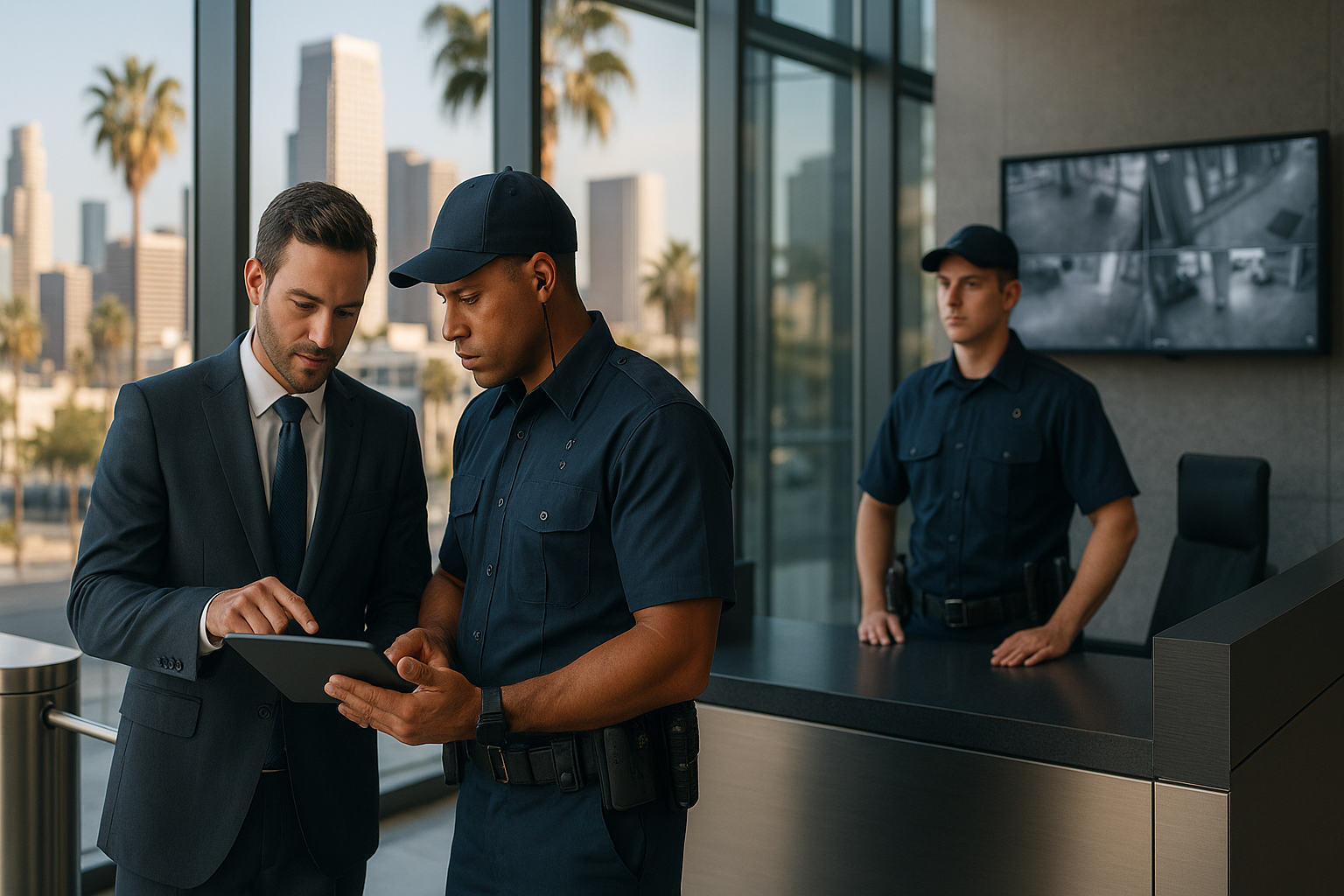
Smash-and-grab headlines, overnight construction thefts, and crowded events have many Los Angeles property owners realizing a simple camera system is not enough. When something goes wrong at a storefront on Melrose, a film set in the Valley, or an HOA in the South Bay, you need trained people on the ground who can deter problems and act quickly. That is why searches for security guard services Los Angeles are surging, and why getting clarity on providers and costs matters before you sign a contract.
Los Angeles is a complex market. Neighborhoods vary widely, local regulations can surprise newcomers, and service quality ranges from exceptional to unreliable. This guide maps the landscape, breaks down realistic pricing, highlights notable providers, and gives you a practical way to compare options so you can pick the right partner with confidence.
What security guard services cover in Los Angeles
Most firms in Los Angeles offer a core set of service lines, then layer on training or industry-specific expertise. Understanding the menu helps you ask for exactly what you need.
Unarmed standing guards are the default for many retail, residential, and lobby posts. They handle access control, visitor management, patrols, camera monitoring, and incident reporting. A well-run unarmed post can improve safety through visibility and consistent enforcement of rules.
Armed guards are used where the risk profile is higher. Think cannabis dispensaries, high-value logistics, late-night retail, or cash handling. In California, armed officers require additional permits and range qualifications. The presence of a firearm increases deterrence but also raises costs and liability. Most providers will insist on a site assessment before recommending an armed post.
Mobile patrol units are a cost-effective option for large properties, parking lots, and HOAs that do not need full-time coverage. A marked vehicle conducts scheduled or randomized patrols, checks doors and gates, handles lockups or unlocks, and documents findings. Some services include alarm response and after-hours escorts for staff.
Event security is common across LA’s venues, galleries, production wrap parties, and festivals. Good event teams specialize in guest screening, bag checks, ticketing lines, crowd flow, backstage and VIP protection, and incident de-escalation. Larger events may need magnetometers and liaison with LAPD or venue security.
Fire watch is required when a building’s fire alarm or sprinkler system is offline. The Los Angeles Fire Department can mandate dedicated fire watch guards to conduct and document patrols until systems are restored. These guards must be comfortable with compliance paperwork and continuous rounds.
Construction site security protects tools, materials, and copper. Options include overnight standing posts, mobile patrols with randomized checks, controlled deliveries, equipment inventory logs, and camera monitoring. Guards often coordinate with general contractors and trades to balance security and workflow.
Concierge and front-of-house security blends hospitality with protection. You see this in Class A offices, luxury residential, museums, and hotels. These officers manage access discreetly, greet tenants, and keep a polished presence without sacrificing vigilance.
Retail loss prevention and asset protection can include plainclothes officers, door greeters, receipt checks, and collaboration with store staff on conflict avoidance and incident reporting. Luxury retail often requires higher training standards and strong customer service skills.
Executive protection and film set security serve high-profile clients, production companies, and traveling talent. Services range from advance route planning and threat assessments to close protection and secure basecamp perimeters. These are specialty teams and bill at premium rates.
How much do security guards cost in Los Angeles?
Rates vary with risk level, training, schedule stability, and labor requirements. In LA, expect higher costs than many other metro areas due to wages, insurance, and California labor law.
Here is how pricing usually works. You pay an hourly bill rate per guard. That rate covers wages, payroll taxes, insurance, benefits, management, training, uniforms, and company overhead. Specialized equipment like patrol vehicles, body-worn cameras, or metal detectors may add to the rate. Many contracts have four-hour minimums per shift, holiday premiums, and higher rates for swing or graveyard shifts.
Typical hourly bill rate ranges in Los Angeles:
- Unarmed standing guard: 28 to 45 dollars per hour
- Armed standing guard: 38 to 65 dollars per hour
- Concierge or luxury retail officer: 32 to 55 dollars per hour
- Event security: 30 to 55 dollars per hour, depending on scope and equipment
- Fire watch: 30 to 50 dollars per hour
- Mobile patrol: 35 to 60 dollars per hour for dedicated patrols, or 25 to 50 dollars per property visit in a shared-route model
- Executive protection: 60 to 120 dollars per hour and up, depending on team composition and risk
Why the spread? Several factors push rates up or down:
- Risk profile. High-theft retail, cannabis, or cash handling drives higher wages, training, and insurance.
- Armed vs. unarmed. Additional permits, skills, and insurance come with higher rates.
- Schedule stability. Consistent, long-term schedules are cheaper than one-off or short-notice coverage.
- Shift and location. Late-night posts, remote sites, or paid parking for guards add cost.
- Training and clearance. Language skills, luxury retail standards, construction safety courses, or client-specific certifications influence bill rates.
- Supervision and reporting. Dedicated field supervision, GPS-tracked rounds, and advanced reporting platforms usually improve quality and can add a small premium.
California labor rules matter. Overtime often starts after eight hours in a day, with double time after twelve, plus premiums for missed meal or rest breaks. Holidays may be billed at one-and-a-half to two times the standard rate. Ask each vendor to state how they handle overtime, holidays, and breaks in writing.
Realistic cost scenarios
A single unarmed lobby guard, 8 hours per weekday. At 34 dollars per hour, that is roughly 5,440 dollars per month before holidays. If you extend to 12-hour shifts, factor in daily overtime on the last four hours or schedule split shifts to avoid it.
Overnight construction coverage, 7 nights per week, unarmed guard for 10 hours. At 32 dollars per hour with some nights at a slight premium, you are in the 9,500 to 11,000 dollars per month range. If theft incidents spike or tools are high value, an armed guard might lift that to 12,000 to 15,000 dollars.
Mobile patrol for a small retail center. Three nightly drive-throughs with door checks, plus weekend lockups. Shared-route pricing might land between 450 and 900 dollars per month, depending on location and scope.
Event security for a 500-guest fundraiser, 6 hours, 12 officers plus a supervisor. At 36 dollars per hour for officers and 45 dollars for supervision, budget roughly 3,000 to 3,600 dollars, excluding equipment like magnetometers.
Executive protection for traveling talent, two-person team for 10 hours. At 85 to 110 dollars per hour per agent, you are looking at 1,700 to 2,200 dollars for the day, plus mileage and possible per diem.
Top security guard providers in Los Angeles
Los Angeles has hundreds of licensed firms. The right choice depends on your risk profile, site culture, and budget. The companies below are established providers with a meaningful LA presence. Use them as a starting point for research, then compare two or three options that match your needs.
Allied Universal. One of the largest firms in North America with extensive coverage across Los Angeles. Broad service lines, from unarmed and armed posts to mobile patrol, event teams, and technology-enabled solutions. Scale helps with 24/7 coverage and multi-site accounts.
Securitas USA. Global provider with deep local branches. Known for standardized processes, training programs, and a mix of guarding and electronic security. Often a fit for corporate, industrial, and healthcare environments.
GardaWorld Security Services. Offers guarding, mobile patrol, and specialized protective services. Active in retail, logistics, and corporate sectors. Strong option when you want standardized reporting and regional coverage.
PalAmerican Security. Focuses on healthcare, education, and complex facilities where de-escalation and compliance are critical. Known for soft skills and industry-specific training.
GSG Protective Services. Headquartered in the LA area with a focus on tailored programs for commercial, residential, and event clients. Offers both unarmed and armed services as well as mobile patrol.
Contemporary Services Corporation (CSC). A go-to for large-scale event security and crowd management in stadiums, arenas, and festivals throughout Southern California.
Security Industry Specialists (SIS). Specializes in high-end retail, tech campuses, and brand-sensitive environments. Emphasis on customer service, appearance standards, and discreet risk management.
American Guard Services, Inc. Southern California provider with a broad portfolio that includes maritime, retail, and property management clients. Offers standing guards and patrol.
This list is not exhaustive. The best provider for a Venice boutique is not always the best for a hospital in Pasadena. Shortlist based on fit, ask for site-specific plans, and validate experience with properties like yours.
Choosing security guard services Los Angeles: how to vet a provider
Licensing. In California, guard companies must hold a Private Patrol Operator license issued by the Bureau of Security and Investigative Services. Individual officers need a current BSIS guard card, and armed officers require an exposed firearm permit. Ask for the company’s PPO number and verify it on the BSIS site. For baton or pepper spray, confirm additional permits. If patrol vehicles will be used, confirm auto liability coverage in the certificate of insurance.
Insurance. Require written proof of general liability, workers’ compensation, and auto liability if vehicles are involved. Many commercial clients ask for at least 1 million per occurrence in general liability and workers’ compensation coverage, with total aggregates often higher. Request to be named as additional insured and to receive a waiver of subrogation where appropriate. Verify that the legal entity on the contract matches the one listed on the insurance certificate.
Training and supervision. Ask about initial and ongoing training, field supervision ratios, and how performance is measured. In California, guards complete 40 hours of BSIS-approved training. Beyond that baseline, discuss site-specific topics like de-escalation, report writing, radio protocol, emergency response, and customer service. Strong providers can describe how supervisors audit posts and coach officers.
Candidate quality. Request to interview or at least screen officers for key posts. Discuss requirements such as customer-facing demeanor for concierge roles, language skills, or prior experience in construction or retail. High turnover is common in this industry, but better firms will share their retention strategies and contingency plans.
Technology and reporting. Look for daily activity reports with photos, GPS-tagged patrols, incident escalation workflows, and a client portal. Reporting quality is often a leading indicator of post performance. Ask for sample reports.
Policies and culture. Discuss use-of-force guidelines, de-escalation practices, and coordination with law enforcement. If your site has vulnerable populations or frequent public interactions, alignment on approach is crucial.
References. Request two or three references for accounts similar to yours. Ask about responsiveness, staff reliability, incident handling, and billing transparency.
Contract terms to understand before you sign
Every detail that is vague on day one can become a headache during an incident. Push for clarity in these areas.
Scope and post orders. Your contract should reference written post orders that define responsibilities, patrol schedules, access procedures, emergency contacts, and reporting requirements. Update these as operations change and get acknowledgment from the provider.
Rates and extras. Nail down the base bill rate per role, supervision charges, equipment fees, holiday premiums, and how overtime is handled. Confirm minimum shift hours and cancellation windows for event or short-notice coverage.
Staffing guarantees. If you need named officers or special qualifications, include them. Ask how replacements are vetted and how much notice you receive if the schedule changes.
Indemnification and limits. Work with counsel to review indemnification, limitation of liability, and additional insured language. Make sure insurance endorsements match what the contract requires.
Termination and performance. Include termination for cause, cure periods, and a notice period for convenience termination. Set simple performance metrics, such as report timeliness, patrol compliance, and response times to escalations.
Do you need armed or unarmed guards?
Not every high-value site needs a firearm present. The choice comes down to risk and brand.
Choose unarmed when deterrence, policy enforcement, and strong customer service are the primary goals. Luxury retail often prefers unarmed officers trained in observational skills and discreet intervention. Office lobbies, museums, and most residential sites also fit well here.
Consider armed when there is a credible risk of violent crime, visible high-value goods, or significant cash handling. Cannabis dispensaries and some logistics sites fall in this category. Armed programs require higher standards for candidate selection, training, and supervision. Insurance premiums and incident reporting will be more intensive.
If you are unsure, start with a professional risk assessment. Some sites adopt a blended approach, for example unarmed officers at guest-facing points and armed officers covering back-of-house operations or after-hours patrol.
When mobile patrol beats a standing post
A standing post provides constant presence, but it is not always the right investment. Mobile patrol can outperform a static guard when you have:
- A large footprint with multiple points to check but relatively low incident volume
- A tight budget that still requires visible deterrence after hours
- Multiple small sites within a few miles that can be added to a shared patrol route
In practice, a strip center might get three randomized patrols between 10 p.m. and 5 a.m., with door checks and a photo-logged report. If issues spike, you can add a temporary standing post or increase patrol frequency to close the gap without committing to a full-time guard.
LA-specific considerations that affect security
Local dynamics matter in Los Angeles more than most cities. Build them into your plan and your budget.
Fire watch rules. The Los Angeles Fire Department can require 24-hour fire watch when life safety systems are down. Make sure your provider understands LAFD expectations for patrol frequency and documentation.
Event permitting. Venues often require proof of insurance, named endorsements, and specific training or equipment for event security. Get these requirements in writing early to avoid last-minute scrambling.
Film production realities. Basecamps, load-in and load-out windows, and changing call sheets demand flexible staffing. Look for providers that have supported productions, understand crew culture, and can add posts with short notice.
Retail theft patterns. Organized retail crime does happen in clusters. Ask providers how they coordinate with nearby merchants, use radio networks or text groups, and adapt staffing during seasonal spikes.
Encampments and outreach. If your site is near sensitive public areas, align on compassionate, lawful engagement policies. Good providers have de-escalation training and know when to involve outreach teams or law enforcement.
Parking and traffic. Many LA sites require paid parking for guards or complex traffic control during events. Include these realities in your scope and budget.
Getting quotes and comparing apples to apples
A strong request for proposal makes comparison easier and reduces surprises. Provide a site overview, hours by post, risk concerns, access control details, and any required certifications. Ask vendors to present:
- An all-in bill rate per role, including supervision and equipment
- Their holiday schedule and premium multipliers
- Overtime policy and how they schedule to minimize unnecessary overtime
- Sample daily activity and incident reports
- Insurance certificates and BSIS license numbers
- A staffing plan with hiring timelines and backup coverage
When proposals arrive, look past the hourly rate. Two dollars per hour saved is not a deal if the provider cannot staff reliably or if reporting is inconsistent. Call references and ask specifically about responsiveness during incidents and after-hours coverage.
Example scopes and what to ask for
Retail boutique on Melrose. Request an unarmed officer with strong customer service skills during peak hours, clear shoplifting deterrence protocols, and incident documentation suited to police follow-up. Ask about discreet radio earpieces, a simple code protocol with staff, and coordination with nearby merchants.
HOA in the Valley. Consider a hybrid of evening mobile patrol with randomized checks plus weekend daytime foot patrols for amenities. Ask for GPS-stamped patrol logs and a plan for resident communication that balances privacy with transparency.
Construction site in Downtown LA. Start with an overnight standing post and add randomized mobile patrol sweeps. Require gate logs, delivery verification, and a photo checklist for high-value tool storage. Revisit staffing if theft attempts occur.
Cannabis dispensary in Mid-City. Armed officers with documented firearms permits and de-escalation training at opening and closing. Strong camera coordination, safe escorts to vehicles, and a clear incident chain of command.
The bottom line on security guard services Los Angeles
Los Angeles offers a huge range of security options, from polished concierge officers to specialized event teams and seasoned armed professionals. Prices reflect local risk, labor rules, and the quality of the program you build. Start with a realistic scope, insist on licensing and insurance proof, evaluate reporting and supervision, and compare more than just the hourly rate. With the right partner and a clear plan, you can deter problems, protect people and property, and keep your operations moving in a city that never really sleeps.