
May 9, 2026
Los Angeles Security Guard Company Services and Pricing Guide
Nobody budgets for a break-in, a lawsuit, or a chaotic event. Yet that is exactly what ends up costing Los Angeles property managers and business owners the most. The painful truth is that security problems are rarely about luck. They come
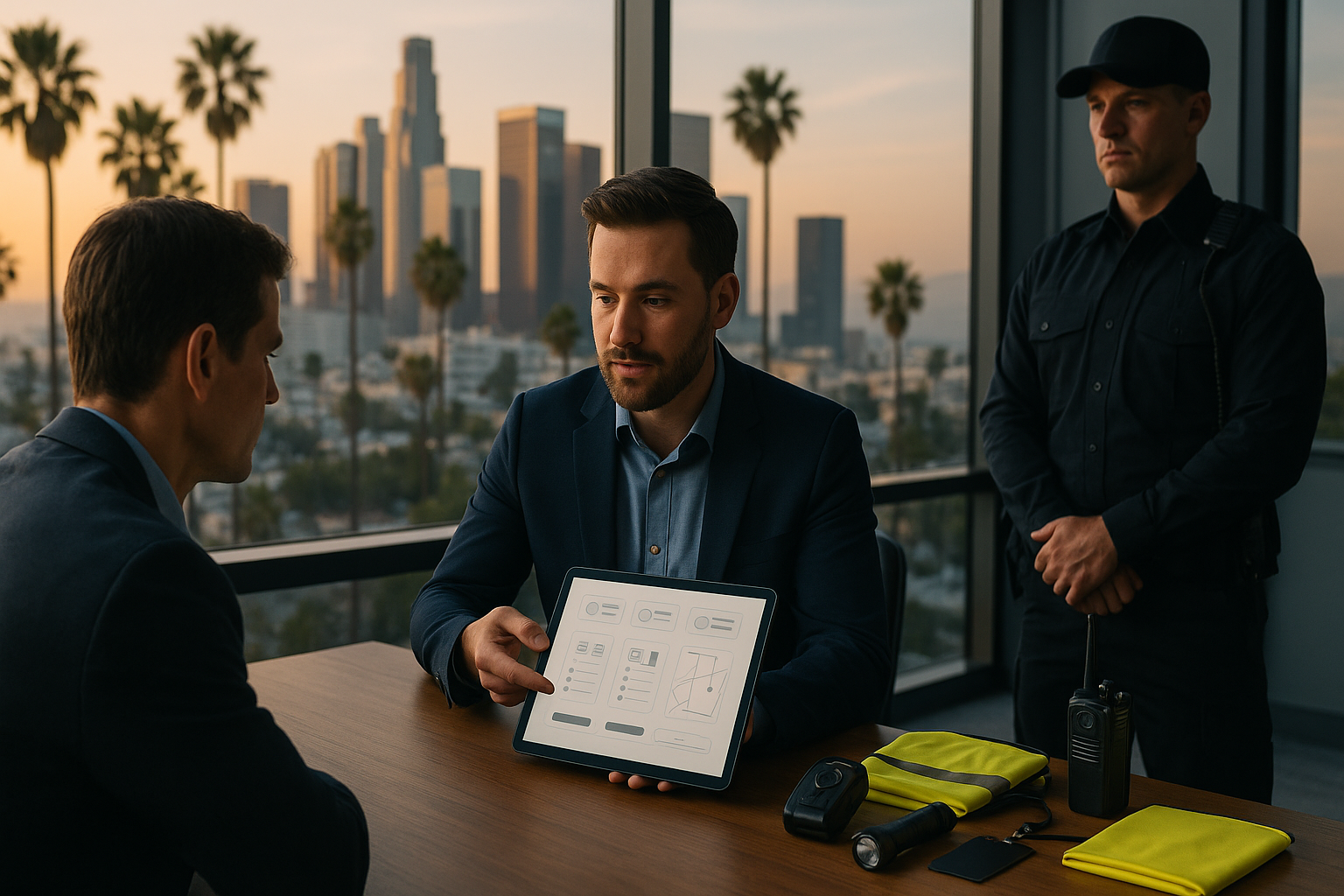
Nobody budgets for a break-in, a lawsuit, or a chaotic event. Yet that is exactly what ends up costing Los Angeles property managers and business owners the most. The painful truth is that security problems are rarely about luck. They come from unclear scopes, the wrong staffing mix, and contracts that hide the real price of coverage.
If you are comparing options for a los angeles security guard company, you are trying to protect people and property without wasting money. You also have to navigate local rules, fierce labor markets, and neighborhoods that can change block by block. This guide breaks down what services reputable LA firms actually provide, how pricing really works, practical cost ranges you can use for planning, and how to choose a partner that keeps you safe and accountable.
What a Los Angeles security guard company actually does
Los Angeles firms cover a wide spread of needs. The right mix depends on your risk profile, location, and the hours you need coverage.
Unarmed standing guards. This is the backbone of most contracts. Unarmed guards control access, greet visitors, monitor cameras, deter loitering and theft, and manage incidents like trespassing or medical calls. They are common for apartments, offices, retail, and lobbies.
Armed guards. Armed coverage is reserved for higher-risk assets or locations with a credible threat. Armed officers must hold an exposed firearm permit in California, keep additional training current, and typically work in pairs for certain posts. Think jewelry showrooms, dispensaries, cash-heavy operations, or security-sensitive film sets.
Mobile patrol. Marked vehicles or bike patrols visit multiple properties on a route. Patrol officers check gates, deter after-hours activity, respond to alarms, and log time-stamped proof of presence. Mobile patrol makes sense for HOAs, small retail centers, and construction sites where full-time guards would be overkill.
Event security. From red carpets to street festivals, event teams handle access control, guest screening, perimeter control, crowd movement, and conflict de-escalation. Supervisors coordinate with producers, venues, and law enforcement. Staffing plans often blend unarmed officers, a few armed personnel if required, and dedicated supervisors.
Construction and fire watch. Open sites attract theft, copper stripping, and vandalism. Construction security combines controlled access during the day with patrols at night. If your fire alarm is down or sprinklers are offline, the Los Angeles Fire Department may require a dedicated fire watch. These guards monitor affected areas continuously and keep strict logs for compliance.
Concierge and front desk. Hospitality-trained officers provide a hybrid of access control and customer service. They handle package management, guest sign-ins, and amenity oversight while maintaining security protocols. This is common in luxury residential, Class A office, and boutique hotels.
Retail loss prevention and store security. Uniformed deterrence, fitting room monitoring, and coordination on organized retail theft are standard. Some brands use plainclothes loss prevention agents trained in lawful apprehension and evidence handling.
Executive protection. Protective agents plan secure movements, conduct advance site assessments, and escort principals. Many assignments are low-profile, with an emphasis on route planning, risk scanning, and rapid response capability rather than visible muscle.
Specialty services. K9 units for perimeter sweeps, cannabis facility compliance with state rules, alarm response for small businesses, and overnight parking lot coverage round out the typical menu.
How pricing works in Los Angeles
Rates are anchored to labor costs, risk, and contract stability. The city’s wage rules, insurance requirements, and round-the-clock scheduling pressure all feed into the final number you see on a quote. Two proposals can look similar on the surface yet be miles apart on supervision quality, training, and reliability.
Typical hourly rates in LA
These are planning ranges for the Los Angeles area. Your actual quote will reflect location, schedule, and scope.
- Unarmed standing guard: $27 to $40 per hour
- Concierge or lobby officer: $28 to $42 per hour
- Armed guard: $38 to $65 per hour
- Event security officer: $28 to $45 per hour, with supervisors at $45 to $70 per hour
- Fire watch: $30 to $45 per hour
- Mobile patrol: $35 to $70 per patrol stop, or $200 to $600 per month depending on frequency
- Executive protection agent: $65 to $150 per hour, higher for specialized teams
- K9 unit add-on: add $20 to $40 per hour over the base officer rate
Short shifts, last-minute requests, and high-risk posts sit at the top of these ranges. Multi-month contracts on predictable schedules trend toward the lower end.
What influences your rate
Risk profile drives pricing first. A quiet lobby in Woodland Hills is very different from a cash-heavy dispensary off Sunset. Complexity matters as well. Multi-tenant access systems, visitor management software, and detailed post orders require higher training and better supervision. Operating factors matter too. Guard posts that are hard to staff, like graveyards or remote sites without parking, cost more since the provider must pay premiums to attract reliable officers.
Add-ons you might see
Most providers quote a fully loaded hourly rate. Some pass through certain costs separately.
- Holiday surcharges for major holidays, often time-and-a-half or double time
- Overtime for coverage that exceeds eight hours per guard per day or over 40 hours in a week, in line with California labor law
- Equipment such as radios, body-worn cameras where allowed, or guard tour systems
- Dedicated on-site supervisors for large teams
- Vehicle fees for mobile patrols or dedicated rover posts
- Setup fees for post order development and technology onboarding
Ask how the provider handles overtime. Ethical firms staff multiple officers to avoid daily overtime where possible, which protects your budget and reduces burnout.
Contract models and minimums
Hourly ongoing contracts are common for standing posts. Event work is sometimes priced flat per shift per officer, with a minimum number of hours per officer. Patrols are usually packaged by frequency, like three drive-throughs per night, seven days a week. Most companies have shift minimums, often four hours per officer, and cancellation windows where you will be charged if you pull coverage too late.
Cost scenarios you can use for planning
Realistic examples help you estimate fast. These are simplified scenarios for budgeting.
Apartment building night coverage. A mid-rise in Koreatown wants an unarmed officer from 8 p.m. to 4 a.m., seven nights a week, to reduce trespassing and noise complaints. At $31 per hour, eight hours per night, you are looking at about $6,900 per month. Add a rover patrol twice per night in the garage at $12 per patrol and you would add about $840 per month.
Construction site mix. A ground-up project in the Valley needs daytime access control during deliveries and overnight theft deterrence. You choose an unarmed officer 7 a.m. to 3 p.m. on weekdays at $30 per hour and mobile patrols three times nightly at $40 per patrol. That is roughly $3,600 per month for days plus about $3,600 per month for patrols, total around $7,200. If copper theft spikes, you might add weekend nights or move to a dedicated night guard for a few weeks.
Retail seasonal coverage. A boutique on Melrose wants weekend coverage during peak months. One unarmed officer Fridays and Saturdays, 2 p.m. to 10 p.m., at $32 per hour, with a supervisor checking in for an hour each evening at $55. That is about $2,048 per month for the officer and $440 for supervision. Plan around $2,500 monthly for the season.
Event security one-night show. A 1,200-guest venue in Hollywood books 12 officers and one supervisor for a six-hour event. Officers at $34 per hour and the supervisor at $60. That is about $2,448 for officers plus $360 for the supervisor, approximately $2,808 before any equipment or barricade rentals.
Executive protection travel day. One agent for a seven-hour day covering hotel to meeting movements in Beverly Hills, at $85 per hour. Approximately $595, plus mileage and parking.
These numbers show the levers you can pull. Short, predictable shifts at low-risk sites keep costs in check. Last-minute changes, long single-guard shifts, and high-risk assets push budgets up fast.
Factors that drive your quote up or down
Los Angeles is a patchwork of micro-markets. A smart plan matches coverage to your neighborhood, culture, and risks without overspending.
Neighborhood dynamics. Downtown, Hollywood nightlife corridors, and dense retail zones command higher rates than quieter residential pockets. Parking availability for officers affects staffing reliability and cost. If parking is tight, ask the provider how they mitigate that.
Hours and schedule stability. Fixed schedules with long-term commitments are cheaper than fluctuating coverage. If you constantly add or subtract hours, the provider will price in that volatility.
Post complexity. Multi-entrance sites, visitor management technology, or mixed use properties need stronger English proficiency, tech comfort, and sharper reporting. That drives rates up compared to a simple perimeter watch.
Armed versus unarmed. Armed officers have higher training and insurance requirements. Only request armed coverage where the threat justifies it.
Supervision and relief staffing. Good companies have field supervisors who conduct site audits and fill last-minute call-offs. You pay a little more for that bench strength, and it pays for itself the first time someone calls out sick.
Technology. Guard tour systems with GPS checkpoints, live incident reporting, and photo logs improve accountability. Some firms include these platforms. Others bill modest fees. These tools can let you safely reduce hours without losing visibility.
Client-side readiness. Clear post orders, working access badges, and a single point of contact cut wasted time. Ambiguity leads to higher estimates because providers hedge against confusion.
Compliance and safety standards in California and LA
Before you compare prices, lock the basics. California regulates private security through the Bureau of Security and Investigative Services, often called BSIS. Every guard must hold a current Guard Card. Armed officers also need an exposed firearm permit. Baton, chemical agent, CPR, and first aid certifications may be required based on post orders. Supervisors should verify training compliance and produce documentation on request.
Companies themselves must be licensed, insured, and in good standing. For most commercial clients, you will want a certificate of insurance listing you as additional insured, with at least one to two million dollars in general liability, plus workers’ compensation and auto coverage if patrol vehicles are used. High-risk sites may require higher limits or umbrella policies.
For fire watch, expect strict logkeeping. If your fire alarm or sprinkler system is impaired, the Los Angeles Fire Department can require continuous fire watch with trained personnel. Logs must capture rounds, affected zones, and any anomalies. Ask candidates to show a sample log template.
For events, coordinate with venues and local law enforcement early. Permits, occupancy limits, and crowd management plans matter. A seasoned firm will speak the same language as venue managers and can map guard posts to ingress and egress points, bar lines, and back-of-house corridors.
Choosing the right los angeles security guard company
Price matters, but reliability and accountability matter more. The cheapest quote that no one shows up for is the most expensive mistake you can make.
Start with local knowledge. LA is not a single market. Ask how the company staffs downtown versus the Westside, the Valley, and the beach cities. Companies that know the ground will anticipate parking headaches, high-traffic weekends, and neighborhood-specific issues.
Evaluate supervision. Who checks on guards? How are no-shows handled? What is the escalation path at 2 a.m.? Companies that operate real field supervision reduce your workload and risk.
Review reporting. Request sample daily activity reports and incident logs. Look for clear writing, time stamps, photos where appropriate, and consistent escalation notes. Ask whether client portals provide real-time visibility.
Check the bench. Staffing depth separates the pros from the rest. Vacations, illnesses, and court dates happen. Good firms have relief officers trained on your post orders, not random bodies pulled at the last minute.
Ask about turnover. High churn drives inconsistency. If your site requires stable faces, ask how they retain officers and what the average tenure looks like.
Clarify subcontracting. Some firms hand off work quietly. If continuity matters, require written approval for any subcontractors and request the same insurance and licensing documentation.
Request references that match your use case. If you run a medical office, retail references are not enough. If you are planning a film shoot, call a producer who has worked with the team.
For due diligence, ask for a few specific documents:
- State license number and proof of insurance with limits
- Sample post orders and reporting templates
- A contact tree for emergencies and account management
You will learn a lot from how fast and how clearly a company responds.
Getting an accurate quote fast
You can cut days off the quoting process and end up with a cleaner scope if you share the right information upfront. Describe your property type, address, hours you want covered, and what you are protecting. Explain any known issues such as trespassing, prior break-ins, or access challenges. If you have cameras, share camera locations and whether guards can view them. Include parking details and any special rules such as union environments or building protocols.
Invite a site walk for standing posts. A 30-minute walkthrough with a notepad saves weeks of headaches. During the walk, align on entry points, patrol routes, incident escalation paths, and vendor contact rules. Ask the company to draft post orders from that walkthrough, then review and refine them together. Treat the first week as a shakedown period and schedule a check-in after a few shifts to address gaps.
For events, share a schedule map, expected headcount, flow of guests, VIP needs, alcohol service details, and end-of-night egress plans. Good event leads will build staffing by zone and time block, then coordinate with venue security.
Ways to get more value without cutting safety
You can protect people and budgets at the same time with smarter planning.
Blend patrol and posts. If your risk is highest during deliveries or evening rush, schedule standing guards only for those hours, then use mobile patrols overnight. The patrols create visible deterrence without paying for idle time.
Right-size armed coverage. Do not over-weaponize low-risk sites. Use armed officers only where there is a specific, defensible need. For some locations, a strong unarmed presence with rapid law enforcement coordination delivers the outcome you want with lower cost and liability.
Use technology to reduce blind spots. Guard tour checkpoints and live reporting let supervisors coach officers in real time. Good reporting also helps you make the case to owners and boards for adjusting hours up or down based on evidence, not guesses.
Tighten post orders. Precise instructions save time and reduce scope creep. Spell out how to handle trespassers, who to call for elevator resets, and what areas require more frequent patrols. If your guard spends half a shift helping with packages, either adjust the scope to include concierge tasks or move those responsibilities elsewhere.
Stabilize schedules. Long-term, predictable coverage keeps rates lower and helps the company assign a consistent team. Consistency improves rapport with tenants and staff, which reduces incidents by itself.
Plan for holidays and events. Los Angeles has heavy event calendars. If your property is near a venue or parade route, share that schedule with your provider. Advanced planning avoids premium last-minute requests and ensures you get experienced officers.
Red flags that signal trouble
Ultra-low rates with no detail. If a quote is far below market and does not explain supervision, training, or equipment, expect missed shifts or undertrained guards.
No proof of insurance or expired licenses. Verify every document. If the company hesitates, move on.
Vague reporting. If you cannot see what you are paying for, you cannot manage risk.
One-person shops for complex posts. Boutique providers can be great, but a single scheduler for a 24-hour site is a recipe for gaps. Match company size to your coverage needs.
Budgeting for your first quarter
Plan for a few adjustments in the first 60 to 90 days. Budget a small reserve for extra hours during onboarding. Most sites stabilize quickly once post orders are tuned and officers learn the rhythms of the property. Build in a review at the 30 and 90 day marks to align on incident trends, resident or customer feedback, and any schedule tweaks.
If your first-quarter numbers look high because incidents were frequent, do not automatically cut hours. Use the reports to identify patterns. You might discover you need targeted coverage on specific days or zones rather than blanket reductions.
The bottom line
A capable los angeles security guard company does far more than put a uniform on a post. The best firms translate your risks into the right mix of people, hours, and accountability, then back it up with clean reporting and responsive supervision. Use the ranges and scenarios here to build a realistic budget. Walk the site with your finalists, ask for the documents that prove competence, and choose the partner who is clear, prepared, and local. When security is well scoped and well managed, you get peace of mind and predictable spend, without overbuying or taking chances that cost more later.