
June 9, 2026
Armed Security Guards Los Angeles: Top Providers & Costs
Hook: A single violent incident, a break-in, or a high-risk crowd can erase months of revenue and reputations. For many Los Angeles businesses and residents, hiring an armed guard is the decisive step between reactive recovery and proactive
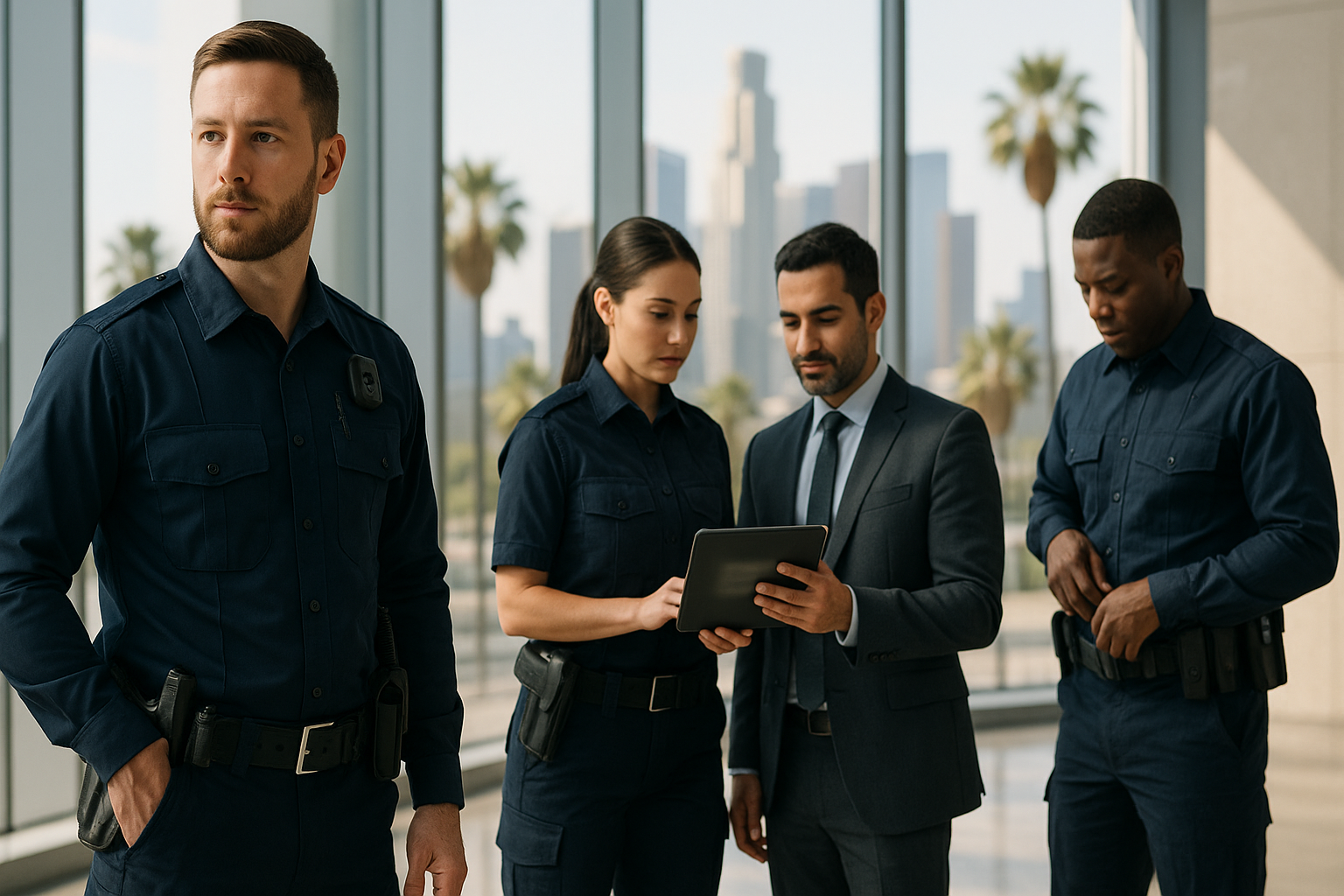
Hook: A single violent incident, a break-in, or a high-risk crowd can erase months of revenue and reputations. For many Los Angeles businesses and residents, hiring an armed guard is the decisive step between reactive recovery and proactive protection.
Introduction When you type armed security guards los angeles into a search box, you are usually deciding between safety, cost, and legal complexity. Los Angeles is large, densely populated, and rich with different threat profiles, from retail theft and construction site theft to high-profile events and executive protection. This article explains how armed guard services in Los Angeles work, what you should expect to pay, which providers are commonly used, and how to choose the right option for your situation. The aim is to give you practical clarity so you can get reliable protection without surprises.
What an armed security guard does and when you need one
Armed security guards provide a visible, trained deterrent and an immediate response option for threats that go beyond what unarmed personnel can safely manage. Their duties vary by assignment. At retail locations they often patrol, observe suspicious activity, and coordinate with police. On construction sites they protect expensive equipment and materials and monitor access points. At private events and for high-net-worth individuals they can offer protective presence, tactical response, and coordination with local law enforcement.
You should consider hiring armed guards when the risk profile includes potential violent confrontation, the value of assets at stake is high, or you need a rapid, on-site escalation capability. Examples include jewelry stores, nightlife venues with a history of assaults, construction sites with repeated theft, celebrity appearances, and executive movements through crowded areas.
Licensing, training, and legal requirements in California
Armed security work in California is regulated. Guards must hold a valid Guard Card issued by the California Bureau of Security and Investigative Services, and anyone carrying a firearm for security purposes must also possess an armed guard permit. Licensing requires criminal background checks, fingerprinting, and completion of state-mandated training, including firearms safety and range qualification.
Agencies should verify and document their guards’ credentials, training records, and regular requalification. They should also maintain written policies on use of force that align with state law, and carry required insurance. Ask any prospective firm to provide copies of their BSIS company license, the guard’s Guard Card, the armed permit, and proof of live-fire training and requalification dates.
Typical services and contract models
Armed guard services come in several common formats. Static guarding places a uniformed officer at a fixed post to control entry, screen visitors, or monitor a specific asset. Mobile patrols use marked or unmarked vehicles to cover multiple sites, often on a scheduled or randomized route. Event security combines crowd control, access management, and emergency response for hours or days. Close protection or executive protection offers a higher level of training and discretion for individuals who require personal security.
Contracts are usually hourly with a minimum shift length, or monthly retainers for ongoing posts. Event work frequently carries a per-hour rate plus a minimum number of hours and additional charges for holidays or overtime. Some providers offer bundled packages for multiple posts or integrated technology, such as CCTV monitoring combined with armed patrol response.
What influences cost for armed guards in Los Angeles
Several clear factors drive price. Location and risk level matter: high-crime neighborhoods and late-night shifts command higher rates. The guard’s experience and special qualifications affect cost as well. Executive protection or guards trained in crowd control and emergency medical response typically cost more than a patrol-qualified officer. Shift length, required days per week, and the need for overtime or holiday coverage raise the effective hourly rate. Equipment and vehicle needs add fees for marked cars, radios, or onsite weapons storage. Finally, contract length and whether the client requires a bonded, insured, and licensed agency with low turnover will alter pricing.
Typical price ranges you can expect
Rates vary, but the following ranges reflect common arrangements in the Los Angeles market. These are general estimates to help with budgeting rather than fixed quotes.
- Hourly rates for a uniformed armed guard on a standard day shift typically range from around $35 to $60 per hour. Lower rates may appear for long-term, multiple-post contracts; higher rates apply in high-risk areas or for night shifts.
- Night shifts, weekend work, or assignments that require guarding in high-crime zones frequently add a surcharge, pushing effective hourly cost into the $45 to $75 per hour range.
- Executive protection or close protection specialists commonly range from $75 to $200 per hour depending on the principal’s profile, complexity, and travel demands.
- Event security often has minimums of four to eight hours per guard. Rates for events tend to fall between $45 and $90 per hour for armed officers, plus event management fees and insurance.
- If a marked patrol vehicle or round-the-clock coverage is required, expect additional vehicle and fuel fees, and possibly a dispatcher or supervisor fee.
Keep in mind agencies typically invoice for a minimum shift, and overtime rules can more than double hourly labor costs if the guard works beyond a standard shift without prior scheduling.
Major providers and how they differ
Large national firms and regional specialists both operate in Los Angeles. National companies often offer scale, standardized training programs, and the ability to cover multiple locations quickly. Regional firms may provide local knowledge, personalized service, and deeper familiarity with LA neighborhoods and venues.
Some widely recognized firms that operate in Los Angeles include Allied Universal, Securitas, GardaWorld, U.S. Security Associates, and Andrews International. Allied Universal and Securitas are known for broad coverage and integrated technology offerings. GardaWorld provides international experience and event support. U.S. Security Associates and Andrews International offer a mix of corporate and local site services. Boutique protective services and smaller licensed firms often focus on executive protection, celebrity services, and customized assignments that require discretion and continuity.
When evaluating providers, consider whether the firm specializes in the type of protection you need. A national firm may be ideal for multi-site corporate programs. A boutique provider might be better for a celebrity appearance or a local construction site that benefits from hands-on supervision and a consistent guard team.
How to vet an armed security provider
Vetting should be rigorous, because personnel will be armed and interacting with the public. Ask for and verify these items before signing a contract: the firm’s BSIS company license, proof that each guard holds an active Guard Card and armed permit, current liability and workers’ compensation insurance, written policies on force and escalation, written incident reporting procedures, and documentation of ongoing training and background checks including fingerprint clearance.
Request references from clients with similar needs and visit an active assignment if possible. Confirm the agency’s supervisor-to-guard ratio and how they handle replacements for absences. Ask about drug testing, internal discipline policies, and the process for handling use-of-force incidents. Finally, confirm how the firm integrates with local law enforcement and emergency services, as that relationship affects response times and legal coordination.
Sample scenarios with estimated budgets
Retail theft prevention, small jewelry store in Koreatown: A single armed guard during business hours Monday through Saturday might cost $45 per hour, assuming a 6-day, 8-hour daily shift. Monthly costs would likely fall into the mid four-figure range, with surcharges for holidays and evening hours.
Construction site in Downtown Los Angeles: For overnight protection with a marked mobile patrol and occasional on-site static posts, expect a blended cost of $40 to $65 per hour. Tethered vehicle patrols and on-call rapid response increase the price.
One-night VIP event in Beverly Hills: Event staffing with two armed guards for 6 hours, plus a supervisor and liability insurance, commonly totals several thousand dollars for the evening. Expect minimums, event management fees, and possible venue insurance requirements.
Executive protection for a visiting celebrity: For close protection with two guards, travel, and advance planning, budgets typically start in the low thousands per day and scale up rapidly based on movement, public exposure, and threat level.
Contract pitfalls and negotiation tips
Common pitfalls include vague scopes of work, hidden fees, unclear minimums, and insufficient oversight clauses. Avoid open-ended contracts without clear replacement and escalation timelines. Negotiate a trial period for longer-term contracts to evaluate fit. Insist on clearly defined performance metrics, such as response times, incident reporting standards, and scheduled supervisory checks. Build termination clauses that allow you to exit for poor performance with reasonable notice.
If you expect variable demand, secure a flexible contract with scalable hours rather than long fixed commitments. For event work, get a written headcount confirmation and specify cancellation terms well in advance to avoid last-minute fees.
Insurance, liability, and what you should require
Require the firm to name you as additional insured on their general liability policy and verify workers’ compensation coverage. Armed security providers should carry a robust general liability policy, professional liability if they provide protective advice, and vehicle insurance for patrol cars. Confirm the policy limits and ask for certificates before work begins. If the assignment involves high public exposure, check whether the firm maintains excess liability or umbrella coverage.
Final checklist before you hire
Before signing, make sure you have these bases covered: clear scope of services, verified BSIS licensing and armed permits, proof of insurance and worker coverage, written use-of-force and escalation policies, training and requalification records, a plan for supervision and replacement, transparent pricing with any surcharges documented, and references from similar clients.
Conclusion Hiring armed security guards in Los Angeles requires balancing risk, cost, and legal compliance. Know the kind of protection you need, verify credentials and insurance, and choose a provider whose experience matches your environment. With clear expectations and proper vetting, armed guards offer a reliable layer of protection that can preserve assets, protect people, and give you control over how risks are managed.