
September 16, 2026
Armed Security Guards Los Angeles: Rates & Services
Strong security presence can mean the difference between a minor incident and a headline-making loss. Whether you manage a busy Hollywood retail store, run a construction site in Downtown LA, or plan an outdoor festival in Griffith Park, th
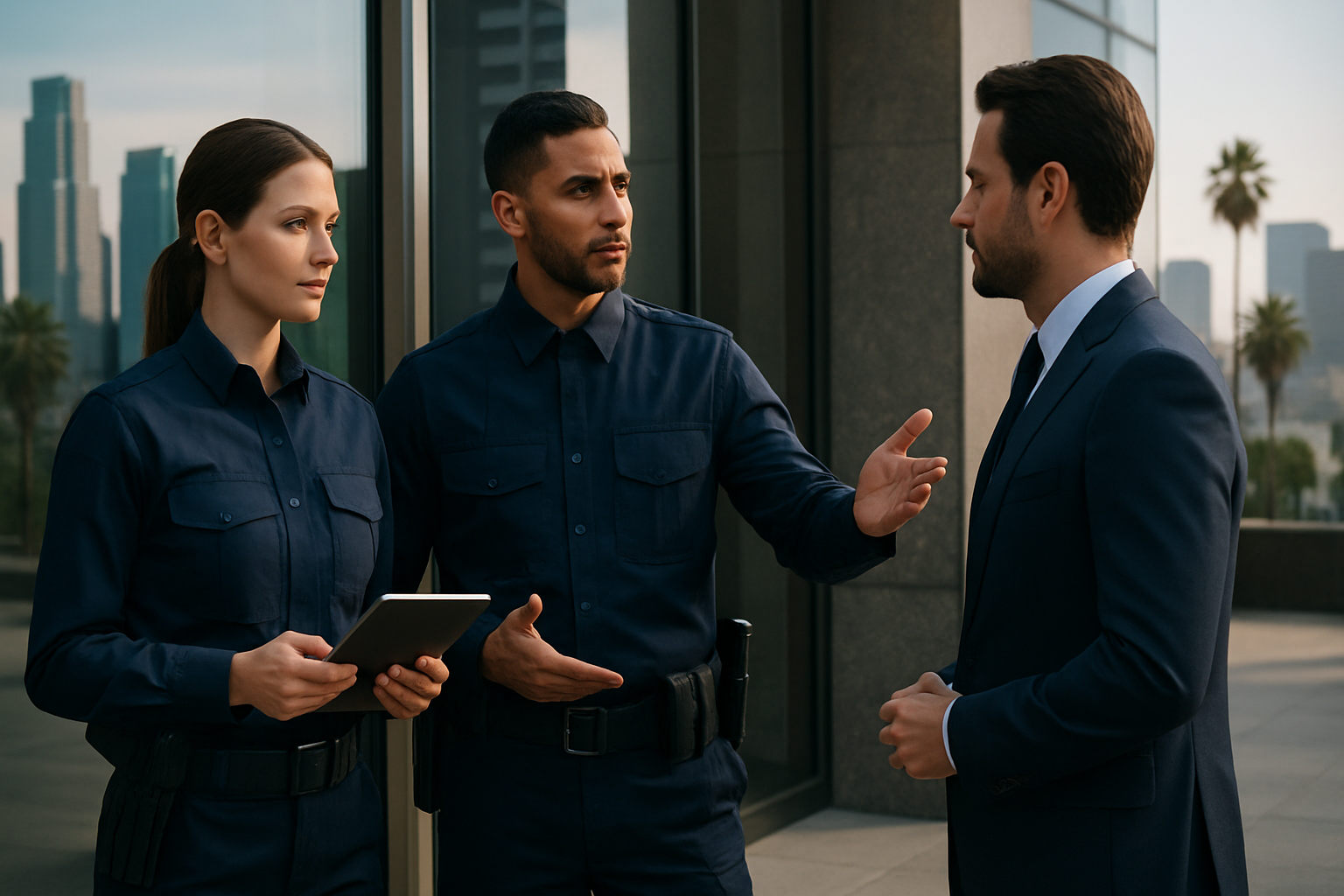
Strong security presence can mean the difference between a minor incident and a headline-making loss. Whether you manage a busy Hollywood retail store, run a construction site in Downtown LA, or plan an outdoor festival in Griffith Park, the decision to hire armed security brings immediate questions: what will it cost, what services can you expect, and how do you choose the right provider?
Introduction
Hiring armed security guards in Los Angeles is not the same as booking general event staff. The stakes are higher, regulations are stricter, and both the responsibilities and training of the guard are different. For property managers, business owners, event planners, and executives, understanding the typical rates, the services offered, and the factors that influence price helps you make prudent decisions that protect people and assets without overspending.
This article explains what armed security guards in Los Angeles do, how companies set their rates, realistic price ranges for common assignments, and practical steps to evaluate providers. You will find examples and contract tips tailored to local realities, so you can hire with confidence.
What armed security guards in Los Angeles actually do
Armed security guards perform more than a visible deterrent role. Their scope of work varies by assignment, but core duties often include securing perimeters, conducting patrols, managing access control, responding to incidents, and coordinating with law enforcement when necessary. In a retail environment a guard may focus on loss prevention and customer safety. At a construction site the priorities shift to equipment protection, perimeter control, and enforcing site rules. For events guards manage crowd flow, check credentials, and isolate incidents fast.
Armed guards also carry legal responsibilities. They must use force proportionally and follow California regulations regarding the display and use of firearms. Clients should expect professional report writing, evidence preservation when incidents occur, and post-incident cooperation with authorities. Many reputable firms add value through incident prevention plans and security audits that reduce risk before an incident occurs.
How rates are calculated
Security companies price armed guard services based on several practical inputs. Understanding these factors clarifies why quotes vary from one provider to another.
First, labor costs form the largest portion of the bill. Guards with active firearm permits, POST training, and specialized experience command higher hourly wages. Overtime, specialty shifts like graveyard hours, and last-minute assignments increase labor costs.
Second, insurance and bonding matter. Companies that carry robust general liability and professional liability coverage, plus workers compensation for employees, reflect those premiums in their rates. Higher coverage limits increase the hourly price.
Third, training and certifications influence price. Guards certified in defensive tactics, first aid, crowd control, or executive protection add cost but also reduce the chance of a costly mistake. If a firm offers background-checked, multilingual guards or guards with prior law enforcement experience, expect to pay more.
Fourth, client-specific needs shape the quote. Post orders that require vehicle patrols, surveillance system monitoring, or armed escorts add equipment and operational expenses. Travel time to remote sites or high-traffic downtown locations with parking and permit challenges also appears in the final number.
Finally, company overhead and local market dynamics determine the margin. Los Angeles’ labor market, permit fees, and cost of doing business push rates higher than many smaller cities.
Typical rate ranges for armed security guards in Los Angeles
Exact prices change frequently, but the following ranges reflect realistic expectations for 2026 Los Angeles market conditions. These figures assume guards are licensed, insured, and carry live firearms legally.
- Standard armed guard, static post: $35 to $65 per hour. This covers a single guard standing or sitting at a post such as a storefront, property entry, or concierge desk.
- Patrol or mobile armed guard: $45 to $75 per hour. Mobile patrols require a company vehicle, fuel, and additional liability considerations.
- Event security, armed: $60 to $120 per hour per guard. Events require higher staffing intensity, temporary liability, and more coordination with promoters and local law enforcement.
- Executive protection/bodyguard: $75 to $250 per hour. Rates vary widely based on threat assessment, travel complexity, and the principal’s profile.
- Overnight shifts or holiday rates: expect a 10 to 50 percent premium over base rates, depending on the provider and the specific day.
These ranges represent base billing rates. Minimum shift lengths often apply, commonly eight hours for regular posts and four hours for short assignments such as incident response. Some firms also set a travel minimum or charge for deployment time.
Examples and scenarios
Retail store: A boutique in West Hollywood that experienced repeated shoplifting hires an armed guard for evening shifts. The firm provides a static guard from 6 p.m. to midnight, a supervisor who performs weekly audits, and monthly loss-prevention reports. Monthly cost depends on shift frequency, but a part-time schedule of five nights per week at $45 per hour for six hours yields about $5,400 per month.
Construction site: A multi-acre project in South Los Angeles requires mobile patrols and gate control. The security firm supplies two armed guards for morning and evening shifts, plus weekend mobile patrols. The quote includes a marked vehicle and incident reporting. The client balances fewer thefts and drop in insurance claims against the cost; in many cases the reduction in stolen equipment justifies the monthly expense.
Music festival: A one-day outdoor festival at Exposition Park requires armed guards for backstage access and cash handling protection. Event staffing uses a mix of unarmed crowd managers and armed credential checkers in high-risk zones. The hourly rate is higher because of the event’s short duration and heightened liability.
Executive protection: A tech executive travelling between meetings in Los Angeles retains an armed close protection team for a series of public appearances. The team coordinates logistics, scout routes, and uses plain clothes as needed. The rate reflects training, readiness, and the level of threat.
Legal, licensing, and insurance requirements in California
Armed security guards in California must comply with state and local regulations. Companies and individual guards typically hold licenses issued by the Bureau of Security and Investigative Services, commonly called BSIS. Required elements include background checks, fingerprinting, firearms permits, and completion of mandated training hours. Some guards also hold a Post Certification from California law enforcement training programs; this adds credibility.
Insurance is equally important. Verify that the security provider carries general liability and workers compensation insurance. For events or contracts involving large crowds, ask for higher policy limits and an additional insured endorsement to protect your business. Bonding may protect against employee theft and certain liability exposures.
Local permits may apply for events, private patrol vehicles, and use of radio frequencies. A reputable firm will manage those requirements and produce documentation when requested.
How to evaluate and vet armed security providers
Choosing a company requires more than comparing hourly rates. Start by asking for a written proposal that outlines scope of work, post orders, training records, insurance certificates, and staff vetting processes. Confirm BSIS license numbers for both the company and individual guards.
Request references with similar assignments in Los Angeles and follow up. Ask about incident handling, how the company reports and documents events, and whether supervisors perform surprise inspections. If possible, ask to meet guards who will be assigned to your site. Observe their demeanor, uniform standards, and ability to communicate clearly.
Check for client-specific services: does the firm provide daily logs, video integration with your cameras, or quick replacement if a guard is sick? Clarify liability by reviewing the contract for indemnity clauses and termination language.
Contract and operational tips to protect your investment
Negotiate clear post orders before the first shift. These orders should detail arrival times, required checks, restricted areas, communication protocols, and escalation procedures. Define what constitutes an incident and the reporting timeline.
Include performance metrics and a remedy clause for consistent underperformance. Many contracts include a trial period of 30 days with a right to adjust staffing after an audit. Avoid open-ended cancellation terms; a 30-day notice period is standard.
Specify provisions for equipment: who supplies body armor, radios, and vehicles? If the guard uses a company vehicle on your property, require proof of vehicle insurance and maintenance logs. For events, require that the security firm liaise with local law enforcement and provide an incident command plan.
How to reduce costs without sacrificing safety
Hiring quality armed security does not mean you must accept the highest quote. Focus on risk-based allocation of resources. For example, combine an armed supervisor with trained unarmed guards for lower-risk areas, or use armed guards during high-risk windows rather than 24/7. Investing in inexpensive deterrents, such as improved lighting, visible signage, and CCTV, reduces the time guards must spend on patrol, lowering total hours billed.
Consider multi-month contracts when you can commit long term, as firms often offer discounted rates for guaranteed business. Cross-train internal staff for basic access control, freeing guards to handle tasks that require a higher skill set.
Finally, make sure your own policies support security efforts. Clear employee procedures for cash handling, deliveries, and after-hours lock-up reduce the burden on guards and decrease the likelihood of incidents.
Red flags to watch for
A low price can be a warning sign. If a quote seems significantly below market, confirm the firm’s insurance and ask to see copies of licenses. Watch out for companies that resist background check transparency, use subcontractors without disclosure, or refuse to provide written post orders.
Another red flag is poor communication during the bid process. If a company is slow to answer questions, does not provide references, or is vague about supervision and reports, they may be equally unreliable on site.
Making the final decision
Balance price with attributes that matter: proven local experience, strong supervision, transparent reporting, and proper insurance. Schedule a walk-through with shortlisted companies and require a written plan that addresses the most likely threats to your site. Ask for pilot service to evaluate performance with minimal long-term commitment.
Conclusion
Hiring armed security guards in Los Angeles requires careful evaluation of services, legal compliance, and costs. Understand how rates are built, what you should expect from a reliable provider, and how to structure contracts so both parties meet objectives. With the right planning you can secure your people, property, and events in a manner that aligns with both your budget and your risk tolerance.