
September 11, 2026
Armed Security Guards Los Angeles: Professional Onsite Protection
A smash-and-grab can take twenty seconds. A well-trained armed security guard can turn that twenty seconds into an incident that is contained, documented, and resolved without injury. In Los Angeles, where high foot traffic, high-value asse
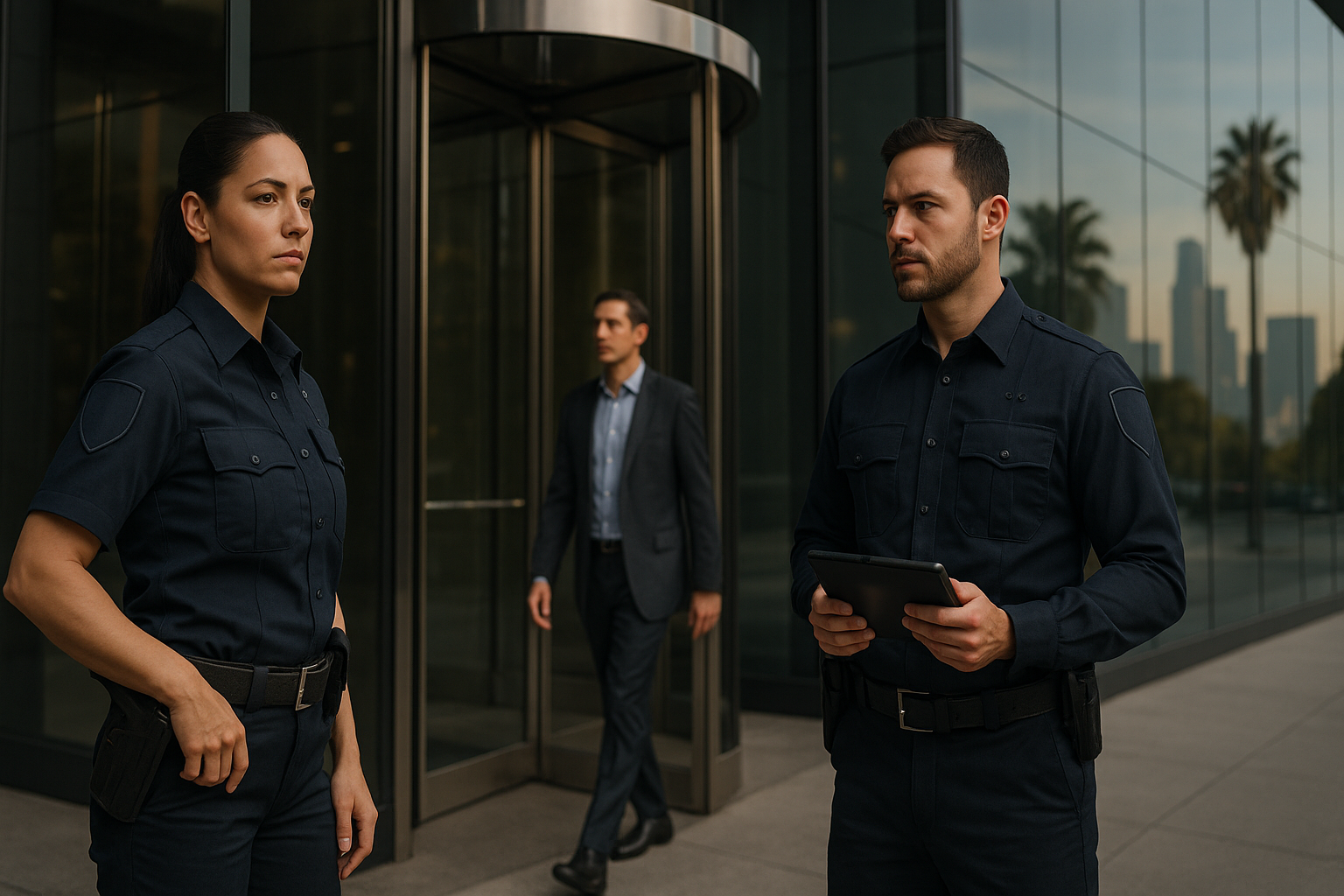
A smash-and-grab can take twenty seconds. A well-trained armed security guard can turn that twenty seconds into an incident that is contained, documented, and resolved without injury. In Los Angeles, where high foot traffic, high-value assets, and large public events create unique security challenges, hiring the right armed security presence changes liability, response time, and outcomes.
Introduction
This article explains what professional armed security guards in Los Angeles do, when you need them, and how to hire the right team. Whether you manage a retail chain, a construction site, an entertainment venue, or a residential property, understanding the role and requirements of armed guards will help you make practical decisions that protect people and property while minimizing legal exposure.
What armed security guards in Los Angeles actually do
Armed security guards provide onsite protection that blends deterrence, active response, and documentation. Their primary tasks include maintaining a visible presence that discourages criminal behavior, intervening when a crime or violent incident occurs, coordinating with law enforcement, and preserving evidence for investigations and insurance claims. Unlike unarmed officers, armed guards can match certain threats with proportional force, but the presence of a weapon also imposes higher training and oversight requirements.
On a typical assignment an armed officer will patrol the site, check access points, verify identity and credentials, monitor cameras when required, de-escalate conflicts verbally when possible, and respond to alarms. After an incident the guard writes a detailed report, secures the scene until police arrive, and may testify or provide recorded evidence. For high-risk assignments such as executive protection or event security, armed officers work in teams and follow strict protocols for movement, emergency extraction, and communication.
Legal, licensing, and insurance baseline
If you plan to hire armed security guards Los Angeles requires you to work with personnel and companies that meet California laws and municipal rules. Guards must hold the state registration issued by the California Bureau of Security and Investigative Services, pass background checks and fingerprinting, and complete state-mandated firearm training and qualification. Security companies operating in Los Angeles must carry appropriate liability insurance and workers compensation, and they should provide proof of insurance and bonding before deployment.
The legal differences between armed security and off-duty law enforcement matter. Armed guards are private contractors with distinct rules of engagement, and their use of force must comply with state statutes and company policy. Employers should confirm that the guard's firearm permits are current and that the provider maintains records of ongoing training and range qualifications. Ask for copies of certificates and written policies on use of force, firearms retention and storage, and coordination with local police.
When to hire armed guards, and when unarmed personnel are preferable
Choosing armed security is not automatic. Unarmed guards often provide excellent deterrence in customer-facing roles, and they lower liability and public perception risks in many settings. Armed guards make sense when there is a credible threat that exceeds what unarmed staff or cameras can manage.
Scenarios that typically require armed security include locations with high-value goods that attract organized theft, construction sites where heavy equipment is frequently stolen, jewelry stores and high-end retail during peak shopping seasons, nightclubs and venues with a history of violent incidents, executive protection for high-profile individuals, and large public events that could be targeted. Properties in neighborhoods with elevated violent crime, or those receiving repeated threats, also justify armed guards.
If the primary concern is theft without the risk of violence, sophisticated access control, inventory management, and unarmed guards may suffice. When evaluating need, consider prior incident history, the value and portability of assets, employee safety risks, and whether rapid police response time is adequate for the site. Armed security fills a gap when those elements point to an elevated risk that could result in serious harm.
How to vet and hire a reliable provider
Vet providers with the same rigor you would apply to hiring a subcontractor for a critical operation. First, verify licensing and insurance directly, not through claims on a website. Request copies of the company’s BSIS registration, evidence of general liability insurance, and proof that individual guards hold current armed permits and training certifications.
Ask about hiring practices. Reputable firms conduct ongoing background checks, drug screening, and requalification for firearms and defensive tactics. They maintain a training program that covers legal use of force, de-escalation, situational awareness, and incident reporting. Insist on seeing training curricula and records for guards who will be assigned to your site.
Request a site-specific security plan. A plan should identify vulnerabilities, detail routes and posts, define rules of engagement, and describe how the company will communicate with you and law enforcement. The plan should also include escalation procedures for serious incidents, chain-of-command contacts, and provisions for replacing or augmenting officers during peak periods.
Ask for references from clients with assignments similar to yours. Visit active sites if possible to observe uniform standards, professionalism, and how guards interact with the public. Clarify supervision: who manages guards on duty, how often supervisors visit sites, and how you will receive incident reports and shift logs.
Contract terms and service-level expectations
A contract should specify hourly rates, minimum shift lengths, required equipment, uniform or plainclothes requirements, and the scope of authority for guards. Include service-level agreements that define expected response times for posting replacements, supervisor arrival times for incidents, and timelines for incident and daily activity reporting.
Define key performance indicators such as deterrence metrics, report delivery times, and a plan for continuous improvement. Set clear termination clauses for failure to meet training, licensing, or performance obligations. Consider adding a probationary period with performance reviews during the first 30 to 90 days.
Cost expectations and budgeting considerations
Hiring armed security guards Los Angeles carries a premium over unarmed security because of training, insurance, and liability exposure. For standard onsite assignments, expect hourly rates that vary based on the guard’s experience, shift times, and responsibility level. Night shifts, holidays, and high-risk details will command higher rates. Executive protection, armed convoy work, and critical incident response are billed at significantly higher levels due to specialized training and duty hours.
Budget for more than wages. Include management fees, uniform costs, equipment like radios and body cameras, and possibly vehicle or patrol expenses. If your site requires specialized certification or K9 units, factor those into the estimate. Finally, account for administrative tasks such as background checks, drug testing, and payroll protections.
Training, rules of engagement, and use-of-force policies
A distinguishing factor between competent and risky providers is the depth of training and the clarity of rules for use of force. Guards should be trained beyond firearms proficiency. De-escalation, first aid and CPR, crisis communication, legal boundaries of detention, and cultural awareness matter, especially in Los Angeles where diverse communities and large crowds are common.
A well-written use-of-force policy explains escalation steps, when lethal force may be justified under law, how to retreat or de-escalate when feasible, and when to engage law enforcement. The policy should also require reporting and immediate notification to both the client and police when force is employed. Confirm that weapons are stored securely when not in use and that officers follow strict accountability for ammunition and firearm maintenance.
Coordination with law enforcement and emergency services
Private armed guards do not replace police, but they do interact with law enforcement frequently. The provider should have established lines of communication with local LAPD stations and know the reporting procedures for incidents. Guards should be trained to manage the scene until officers arrive, preserve evidence, and assist with witness statements. The company should also brief local police on large planned events or security posture changes to reduce confusion during an incident.
Technology that enhances armed security effectiveness
Modern armed security integrates hardware and software to improve situational awareness and evidence collection. Body-worn cameras provide objective records of incidents and support both legal defense and training. GPS-tracked patrol logs verify that officers checked assigned posts on schedule. Remote monitoring systems allow guards to receive alerts from video analytics and access control systems, creating a tighter feedback loop between detection and response.
Consider providers that offer digital reporting platforms so you can receive daily activity reports, photographs of security concerns, and real-time alerts. These tools make it easier to analyze patterns, adjust patrols, and justify changes in staffing levels based on data rather than anecdotes.
Real-world examples to illustrate deployment
Imagine a downtown jewelry store that experienced two attempted robberies in six months. Owners upgraded cameras, but the crimes persisted. They hired armed security guards who conducted visible foot patrols, managed entry points with discreet screening, and coordinated with nearby businesses to share threat intelligence. The visible presence reduced repeat attempts and created a documented chain of incidents that helped secure better insurance terms.
Consider a beachfront construction project that suffered repeated equipment theft at night. Armed mobile patrols with secure vehicle storage and rapid response protocols deterred theft. When a theft attempt occurred, the guard intercepted the suspects, detained them until police arrived, and preserved the scene with photos and statements. The company recovered some equipment and avoided schedule delays that thefts typically cause.
Common mistakes clients make, and how to avoid them
Clients sometimes choose the cheapest provider without checking licensing, training, or insurance. That short-term saving often turns into a long-term liability. Another mistake is assuming armed guards will act like police; private security must follow company and state rules. Finally, failing to review and update the security plan after incidents or changes to the site leaves vulnerabilities unaddressed.
Avoid these problems by demanding documentation, insisting on a trial period with measurable KPIs, and committing to regular reviews. Require that the provider update the plan after any incident and provide follow-up training if gaps are discovered.
Final checklist before signing a contract
Before you sign, confirm current licensing and permits, verify insurance coverage, review training and qualification records, inspect the proposed security plan, and confirm supervision and escalation procedures. Make sure incident reporting processes and communication expectations are written into the contract. If possible, visit another active site to observe the provider’s performance live.
Conclusion
Armed security guards Los Angeles can offer decisive onsite protection when risks require more than cameras and unarmed staff. The right team balances deterrence, legal compliance, and disciplined, professional response. By verifying licenses, examining training, insisting on clear policies, and integrating technology, you can hire armed guards who reduce risk, protect assets, and maintain public safety while minimizing liability.