
June 26, 2026
Armed Security Guards Los Angeles: Licensed, Insured Protection
Hook: When a celebrity screening, high-value shipment, or critical facility needs protection, an unarmed presence is often not enough. In Los Angeles, where high-profile targets and dense urban risk converge, hiring armed security is a comm
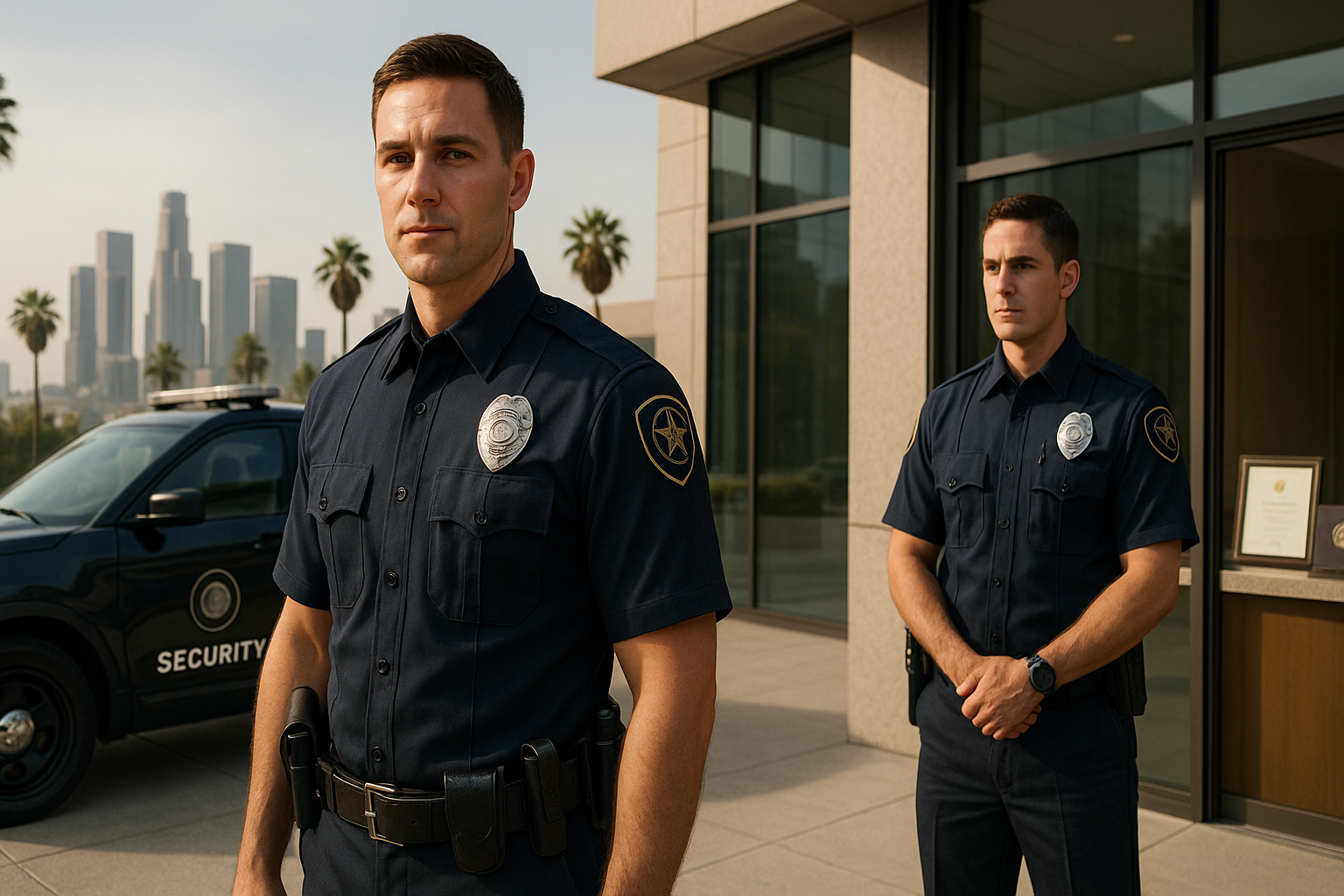
Hook: When a celebrity screening, high-value shipment, or critical facility needs protection, an unarmed presence is often not enough. In Los Angeles, where high-profile targets and dense urban risk converge, hiring armed security is a common decision, but it demands careful attention to licensing, insurance, and professional standards.
Introduction Armed security guards Los Angeles offers a level of deterrence and response capability that many organizations require. Yet the label armed does not remove complexity. California imposes strict licensing and training requirements. Insurance must be tailored to the hazards of carrying a firearm in public. Employers must select vendors who combine legal compliance with de-escalation skills and sound operational procedures. This article explains what licensed, insured armed security looks like in Los Angeles, how to evaluate providers, what to expect on site, and practical steps to reduce liability while improving safety.
Why businesses and individuals choose armed security in Los Angeles
Los Angeles presents a mix of environments where risk varies quickly. A retail strip mall near a major transit hub faces different threats than a celebrity residence or a film production set. Armed security becomes a consideration when the perceived threat level exceeds what unarmed patrols can mitigate, or when rapid armed response is needed and police response times are impractical.
Companies hire armed guards for several reasons. They deter organized theft and violent crime, provide secure escort for high-value assets, protect VIPs, and manage access at locations where weapons are more likely to be encountered. In some cases insurance underwriters or clients require armed protection for certain risks. A well-trained armed guard acts as a visible protective presence while also preventing incidents through situational awareness and early intervention.
Licensing requirements for armed security guards in California and Los Angeles
California regulates private security through the Bureau of Security and Investigative Services. Anyone who carries a firearm while performing security duties must hold a Guard Card with the requisite firearm permits. For armed security guards Los Angeles, the process typically includes a 40-hour training for prospective guards, plus additional firearm training, a detailed background check, fingerprinting, and in many cases a state firearms permit and local endorsements.
Training covers firearm safety, use of force law, report writing, arrest authority, crowd control, and first aid. The Peace Officer Standards of Training do not apply to private guards, so agencies must ensure their staff meet or exceed state requirements. Los Angeles County and many municipalities may require additional business licenses or local permits. Companies should request copies of each guard’s Guard Card, firearm permit, and any local credentials before engagement, and keep them on file.
Insurance and risk management for armed security
Carrying firearms increases both risk and insurance needs. A standard general liability policy may not suffice for armed operations. Providers should carry a combination of general liability, professional liability, and specific coverage for weapons-related incidents. Limits commonly start at one million dollars per occurrence, but higher limits are prudent for high-risk assignments.
Workers compensation is mandatory for employees, and it protects both the guard and the employer. Employers also need to verify that the security company has sufficient umbrella or excess liability coverage and that the policy language explicitly covers armed operations and third-party claims arising from use of force. If the assignment involves transportation of valuables, cargo insurance and fidelity bonds may also be necessary.
Before hiring, request certificates of insurance and read the policy endorsements, or have counsel review them. Ensure the policy names your business as an additional insured when appropriate. Verify that the coverage remains active for the length of the contract and that the insurer is reputable.
Training, qualifications, and performance standards to expect
A licensed armed guard should demonstrate skills beyond safe firearm handling. Expect proficiency in conflict resolution, situational awareness, incident reporting, and emergency medical response. Many reputable firms provide training programs that include scenario-based drills, force continuum education, and regular firearm qualifications. Advanced assignments may require certified training in close protection, executive protection, or crowd management.
Check whether guards receive ongoing training rather than a one-time qualification. Regular requalification on firearms, annual legal updates about use of force, and routine physical fitness or defensive tactics refreshers are signs of a professional program. Ask for documentation of training curricula, instructor credentials, and frequency of assessments.
Roles and responsibilities of armed security on site
Armed security guards fulfill multiple roles. They secure perimeters, control access, conduct patrols, escort personnel and assets, and act as first responders during violent incidents. They must also maintain professional conduct, collect and report intelligence about suspicious behavior, and coordinate with law enforcement when incidents exceed their authority.
Clear rules of engagement are essential. The contract should define when a guard may draw or discharge a weapon, how to handle trespassers, and the protocol for interacting with law enforcement. Guards must prioritize de-escalation where possible. Use of force is a last resort and must comply with both state law and company policy.
Cost factors and typical pricing for armed security in Los Angeles
Pricing for armed security in Los Angeles varies widely by assignment. Simple static posts for low-risk commercial properties will cost less than executive protection, event security for large crowds, or transport of high-value assets. Variables include guard experience, required certifications, time of day, geographic location, vehicle and equipment needs, and the client’s liability exposure.
As a general guideline, expect base hourly rates higher than for unarmed guards because of the added training, licensing, and insurance costs. Weekend or late-night shifts often carry premium rates. Additional costs may appear for supervisor oversight, armed transport vehicles, or specialized gear. Obtain detailed quotes that separate hourly labor, supervision, equipment fees, and any incidental charges so you can compare providers accurately.
How to vet and choose an armed security provider in Los Angeles
Start with credentials. Confirm the company is licensed to operate in California and registered in Los Angeles if required. Request copies of insurance certificates and a sample contract. Review their hiring standards, background check procedures, and drug testing policies. Ask how they recruit, qualify, and retain staff, because employee turnover directly affects service quality.
Evaluate culture and training. Request training schedules, ask about scenario exercises, and inquire how supervisors assess guard performance. Ask for client references with similar assignments. Visit a live post or request a trial period to observe professionalism, punctuality, and reporting practices.
Consider operational capabilities. Does the company offer electronic incident reporting, GPS-tracked patrols, or integration with your existing alarm systems? How do they communicate with on-site management and local police? Strong providers use technology to document activity and deliver transparent, timely reporting.
Finally, assess how the vendor manages escalation. They should have clear incident escalation matrices, written post orders, and a chain of command. Verify who will be your point of contact and how often scheduled performance reviews will take place.
Typical use cases and real-world scenarios
Three scenarios illustrate how armed security operates in Los Angeles.
A film production set handling expensive equipment and public crowds may hire armed guards to control access to parking areas and escort cash or equipment. Guards work with location managers to establish safe routes, provide secure storage oversight, and coordinate with local police when stunts or special effects are planned.
A jewelry store in an urban shopping district may schedule armed guards during peak hours and for deliveries. Guards perform high-visibility patrols, maintain constant presence during transactions, and escort employees during late-night closures. Their presence deters smash-and-grab attempts and provides immediate armed response until police arrive.
A residential complex housing high-profile tenants requires a combination of access control, patrols, and discreet executive protection when tenants arrive or depart. Guards at such assignments are trained to balance a low profile with readiness to act, and they follow strict rules for the use of force and tenant privacy.
Each scenario demonstrates the need for tailored post orders, ongoing communication with clients, and professional restraint.
What to expect on site: daily operations and incident handling
A professional armed guard arrives in a marked or unmarked uniform, depending on the client’s needs, and conducts a briefing with site management. They should review post orders, log checks, and begin patrols according to a schedule. Many companies use GPS-verified checkpoints and electronic logs so both client and provider can review activity.
In an incident, the guard secures the scene, calls for police if needed, provides first aid if trained and safe to do so, and preserves evidence without contaminating it. They must write a clear, factual incident report that includes time stamps, names, witness statements, and any actions taken. If force was used, the report should detail the circumstances precisely and be submitted promptly to both the company and the client.
Transparency is crucial. Expect timelines for notifications, escalation to supervisors, and a post-incident review. A reputable provider will offer debriefs, lessons learned, and adjustments to post orders to prevent recurrence.
Legal liability and how to minimize risk
Hiring armed guards raises legal exposure for both the security company and the client. Proper vetting, clear contract language, and appropriate insurance reduce that exposure. Clients should require indemnity clauses where appropriate, insist on being named additional insureds, and demand proof of coverage for weapons-related incidents.
Operationally, minimize risk by insisting on detailed post orders, continuous supervision, and documented training. Clarify who has authority to detain, use force, or call local law enforcement, and ensure these practices align with state law. Maintain incident logs, train staff on bias-free enforcement, and conduct periodic audits.
If the assignment carries elevated risk, involve counsel to review contractual language. Updating post orders after an incident and maintaining open communication with local police can also reduce liability and improve outcomes.
Contract checklist and key clauses to include
A solid contract protects both parties. Include the scope of services, a clear description of post orders, and defined performance metrics such as response times, reporting cadence, and supervision frequency. Specify licensing and insurance requirements, including liability limits and additional insured status. Define payment terms, rates for overtime or premium shifts, and mechanisms for rate adjustments.
Include termination clauses that allow either party to end the contract for cause, and require the vendor to replace guards quickly if performance is unsatisfactory. Address confidentiality if the site involves sensitive activity, and specify background checks, drug testing, and training obligations. Finally, require post-incident cooperation, detailing access to reports, evidence, and internal investigations.
Conclusion Armed security guards Los Angeles can provide necessary protection when risks exceed what unarmed personnel can manage. Choosing the right provider means confirming licenses, verifying insurance, evaluating training and supervision, and clarifying contractual obligations. A well-run armed security program reduces crime, improves confidence among staff and visitors, and limits legal exposure when incidents occur. For high-risk assignments, insist on rigorous vetting, clear rules of engagement, and documentation. That approach will give you licensed, insured protection that meets the demands of Los Angeles.