
September 23, 2026
Armed Security Guards Los Angeles Licensed & Insured
Opening a property gate or stepping onto a busy event floor in Los Angeles often brings a pulse of unease. Whether you manage a high-value retail store in Hollywood, run a construction site in South Central, or coordinate a celebrity appear
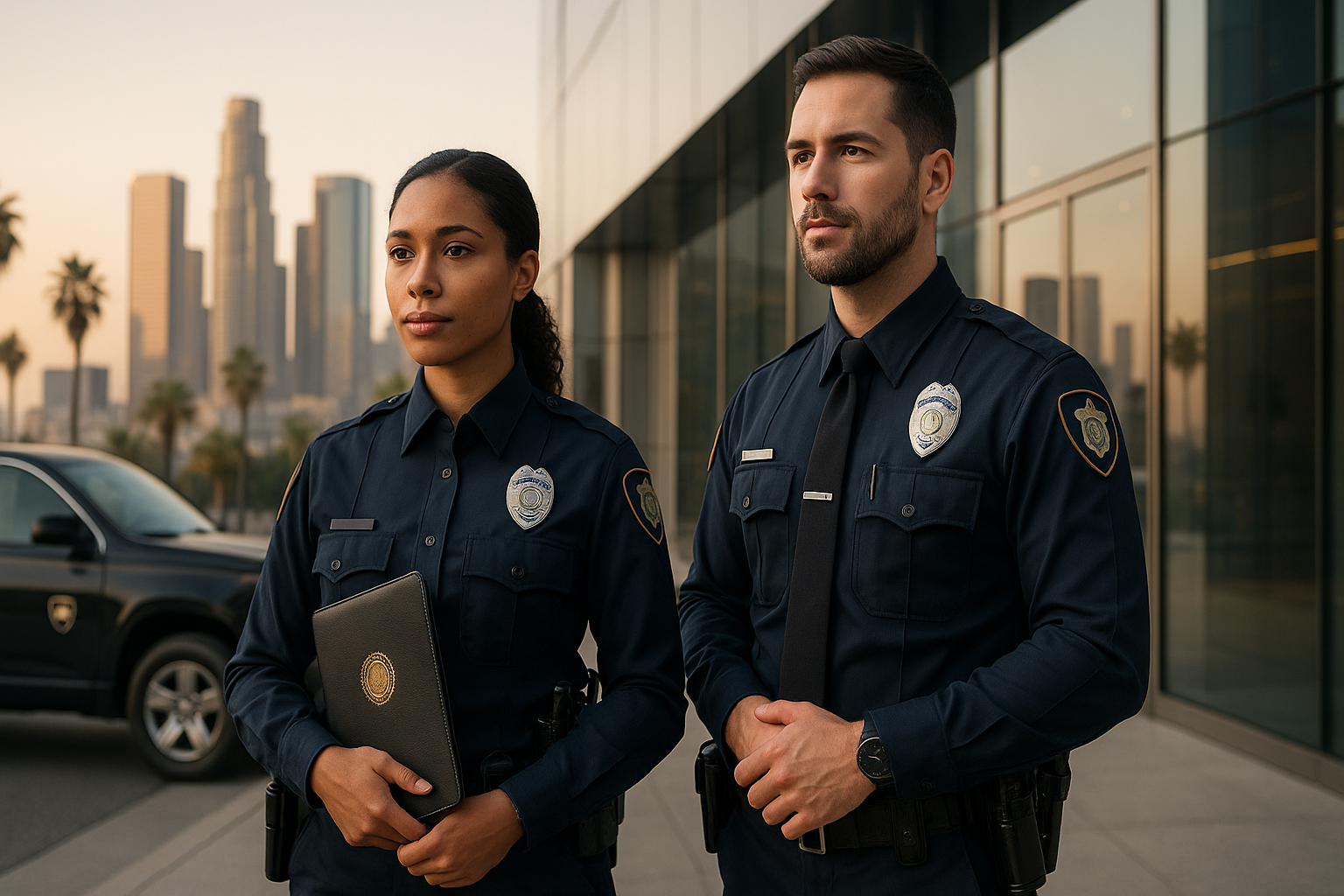
Opening a property gate or stepping onto a busy event floor in Los Angeles often brings a pulse of unease. Whether you manage a high-value retail store in Hollywood, run a construction site in South Central, or coordinate a celebrity appearance, the presence of trained, licensed, and insured armed security can be the difference between a quickly contained incident and a costly headline. When the stakes include people, property, reputation, and legal exposure, cutting corners is not an option.
This article explains what licensed and insured armed security guards offer in Los Angeles, how state and local rules shape their operations, what you should expect on site, and how to pick a provider that reduces risk rather than adds to it. If you are vetting proposals, preparing a contract, or simply determining whether armed protection is necessary, read on for clear, practical guidance.
Why armed security matters in Los Angeles Armed security guards provide immediate, visible deterrence and the ability to respond when a situation escalates beyond verbal de-escalation. Los Angeles is geographically large and diverse; property and public safety risks vary by neighborhood, by time of day, and by event type. For situations involving known threats, large crowds, high-value assets, or a history of theft or violence, armed guards bring capabilities that unarmed guards do not.
That said, hiring armed personnel changes the legal and operational landscape. It places additional responsibility on you and on the security firm to verify licensing, training, supervision, policies, and insurance. The next sections walk through those requirements and show how to assess them.
Armed security guards los angeles: licensing and insurance you need to see In California, the baseline credential for any private security professional is a guard card issued through the California Bureau of Security and Investigative Services, or BSIS. A guard card requires background checks and fingerprints, and guards must complete state-mandated training. Armed security guards must hold that guard card plus a separate firearms permit or endorsement issued by BSIS, which confirms completion of approved firearm training and range qualification. Employers usually keep copies of these credentials on file and available for client review.
Insurance protects you and the security provider if something goes wrong. At minimum you should confirm the company carries commercial general liability insurance and workers compensation insurance for its employees. For armed services, higher liability limits are common and prudent. Many reputable firms also maintain professional liability coverage and an umbrella policy. Ask for certificates of insurance that name you as an additional insured when you require it for a contract or event.
Beyond insurance and licensing, responsible firms maintain written use-of-force policies, regular firearms requalification, and continuing education in de-escalation, legal constraints, and customer service. These items, combined with strong documentation, reduce the chance of an incident that results in civil litigation or criminal exposure.
What to expect from armed security on site A professional armed guard delivers more than a holstered firearm. Expect a layered set of competencies and behaviors that demonstrate control and judgement.
Preparation and briefings: Before deployment, the guard should receive a clear written post order that details their responsibilities, authority limits, emergency contacts, and escalation procedures. For event work, this order will include crowd flow plans, entry and exit points, and communication protocols with local law enforcement.
Uniforms and identification: Guards should present a professional appearance, with clear company insignia and visible identification proving their guard card and firearms permit. Discreet attire may be appropriate for executive protection; high-visibility uniforms suit crowd control and perimeter enforcement.
Tactical restraint and de-escalation: Modern training emphasizes verbal de-escalation and conflict avoidance. Armed guards should demonstrate restraint, using firearms only as a last resort consistent with law and policy. They should also be trained in less-lethal options and first aid, including CPR and trauma response.
Incident reporting and documentation: Every incident, no matter how minor, should generate a written report with time stamps, witness statements, and any evidence collected, such as video or photographs. Good reporting simplifies insurance claims and provides a factual record if law enforcement or courts become involved.
Coordination with law enforcement: Armed guards are not replacements for police. They should have clear protocols for when to call 911 and how to coordinate with the Los Angeles Police Department or local jurisdictions. If your site is in a part of the city that uses a dedicated community policing team, a professional security provider will already have contact channels established.
Common use cases in Los Angeles, with examples Retail and shopping centers: High-value stores in tourist-heavy districts often face organized retail theft. An armed guard at the entrance or inside the store provides deterrence and quick containment while staff and police are alerted. For nighttime drop shipments or cash-in-transit situations, armed escorts reduce the risk of robbery.
Construction sites and material theft: Steel, copper, and equipment are frequent targets. An armed mobile patrol or stationed guard can deter thieves and provide immediate response to trespassers who intend to remove materials by vehicle.
Events and nightlife: Concerts, private parties, and nightclubs require crowd management and rapid intervention capability. Armed guards assigned to perimeter points and VIP areas can respond to aggressive behavior and coordinate with venue security to maintain order.
Executive protection and celebrity details: When the safety of a principal is the primary concern, armed guards with specialized training in close protection, route planning, and secure transportation are used. These assignments often require background checks on personnel, advanced planning, and discreet uniforms or plain clothes according to the client’s needs.
Film sets and production sites: Film locations often contain expensive equipment and open sets. Armed security can secure set boundaries and control access during off hours, while complying with industry insurance and union requirements.
How much do armed security guards in Los Angeles cost Pricing reflects risk, skill, and logistics. Expect armed security to cost significantly more than unarmed services because of higher insurance, training, and liability. Typical hourly ranges for armed guards in Los Angeles run from roughly mid-thirties to low eighties per hour, depending on the complexity of the assignment. A static post in a low-risk neighborhood might sit at the lower end of that range. High-risk details, executive protection, or rapidly deployable teams can push toward the top.
Contracts may include minimum shift lengths, overtime rates, site visit fees, and charges for reporting or special equipment such as armored vehicles or K9 units. Events often involve a flat rate for pre- and post-shift planning, liaison with LAPD, and additional staff for entrances and backstage areas.
When comparing quotes, ask for a breakdown of costs and what is included. A lower hourly rate that cuts out incident reporting, background checks, or weapons insurance will create downstream expenses far larger than the original savings.
How to verify credentials and quality before hiring Demand proof, and take time to verify it. A reputable company will provide documentation willingly and will not balk at client due diligence.
Check the BSIS guard card and firearms endorsement: Request copies of each assigned guard’s guard card and their firearms permit. You can also verify company licensing and registration with BSIS online.
Confirm insurance certificates: Ask for a certificate of insurance that lists policy types and limits, and names your company as an additional insured where appropriate. Cross-check policy effective dates and carrier names.
Review training records: Ask for records of initial firearms training, range qualification, and annual requalification. Training should include California use-of-force law, judgmental scenarios, and medical response.
Request background and employment verification: A provider should perform Live Scan fingerprinting and criminal background checks. For higher-risk details, insist on a supervisory chain of command with documented vetting for all supervisors.
Ask for references and visit active sites: Speak to other clients in Los Angeles who have used the firm for comparable work. If possible, visit a current deployment to observe guard behavior, uniforms, and reporting practices.
Key questions to ask a security company What is your BSIS license number and can you provide copies of your armed guards’ credentials? How often do guards requalify on firearms and what does that training include? Who supervises the guards on site, and what is your escalation protocol for use-of-force incidents? Can you supply a current certificate of insurance, and will you add my organization as an additional insured? What are your incident reporting procedures, and can I see a sample report? How do you coordinate with LAPD or local law enforcement? What is your turnover rate for guards assigned to long-term posts?
These questions establish expectations and expose vendors that cut corners.
Operational tips for working with armed security Integrate the security provider early in planning. For events and construction projects, include the security firm in pre-event briefings and tabletop exercises. Provide them access to site plans, contact lists, and any available video surveillance. If you have existing CCTV or access control systems, allow the security team to use them, which reduces the need for additional personnel.
Define authority and limits in writing. A written contract should clarify whether guards may detain suspects or only detain until police arrive, how to handle trespassers, and any restrictions on use of deadly force beyond legal requirements. Also specify who pays for property damage caused during an incident and how claims will be handled.
Build communication channels with law enforcement and neighboring properties. Encourage your security firm to establish direct lines to nearby LAPD stations and property managers. That network speeds response and reduces confusion during incidents.
When armed security might not be the right choice Armed guards are not always necessary. For low-risk retail, daytime reception, or community events with peaceful crowds, trained unarmed guards focused on access control and customer service can be both safer and more cost effective. Technology, such as electronic access control, high-quality CCTV, and rapid response mobile units, can replace the need for armed presence in many situations.
Additionally, public perception should factor into your decision. For neighborhoods or venues where a visible armed presence may escalate tensions or harm brand image, consider uniformed unarmed officers backed by a rapid armed response that remains offsite unless called.
Final thoughts and next steps Hiring armed security guards in Los Angeles means balancing protection, legality, cost, and community impact. Start with documentation: verify BSIS guard cards, firearms permits, and insurance certificates. Look for providers that emphasize de-escalation, rigorous firearms training, and transparent reporting. Match the level of force and visibility to the risk you face, and embed security planning in the earliest stages of any project or event.
If you need a checklist to bring to vendor meetings, include verification of licensing, proof of insurance, a copy of the post orders, a sample incident report, and references from comparable local assignments. Those simple documents will separate professionals who accept responsibility from contractors who transfer risk to you.
Conclusion Armed security guards in Los Angeles perform a critical function when risk is real and immediate. When they are licensed and insured, they protect people and property while shifting liability appropriately. By verifying credentials, reviewing training and policies, and clarifying expectations in writing, you can hire armed security that reduces risk and preserves the safety and reputation of your site or event.