
July 1, 2026
Armed Security Guards Los Angeles: Costs, Licensing & Tips
Hook: A single violent incident can close a business for good, or turn a busy event into a legal and reputational nightmare. For many Los Angeles property managers, event organizers, and business owners, the quickest way to reduce that risk
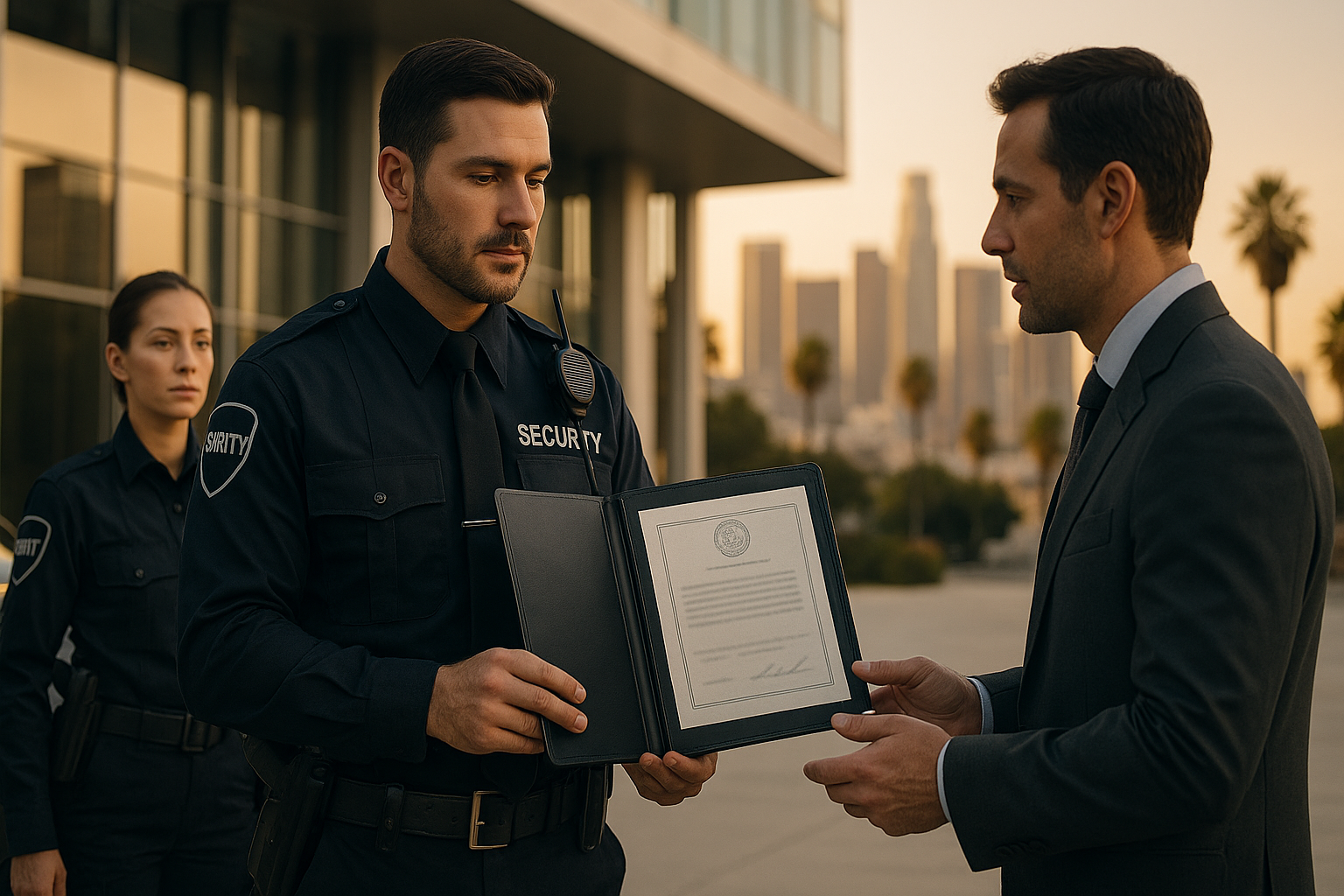
Hook: A single violent incident can close a business for good, or turn a busy event into a legal and reputational nightmare. For many Los Angeles property managers, event organizers, and business owners, the quickest way to reduce that risk is hiring armed security guards. That decision brings promises of deterrence and response, and it also raises practical questions about cost, licensing, liability, and what to expect on the ground.
Introduction If you searched for armed security guards Los Angeles, you are probably weighing whether armed protection is necessary, and what it will cost you in money and management time. This article walks through the licensing landscape, realistic cost ranges, factors that drive price, and concrete tips for hiring and supervising armed officers in Los Angeles. Read on for scenarios, sample budgets, and a practical checklist you can use the next time you request proposals.
Why armed guards, and when they make sense Armed security is not the answer for every situation. Armed officers increase deterrence, provide an immediate defensive capability, and can calm clients and staff when threats are credible. They are commonly deployed for jewelry stores, banks and high-end retail, construction sites with valuable materials, executive protection, certain nightlife venues, and large events where crowd risk is elevated.
On the other hand, armed guards raise costs, legal exposure, and the need for strict policies and supervision. If your main risk is shoplifting, or you want a friendly presence to assist customers, unarmed guards, cameras, or better lighting might be more effective and far less expensive. Consider the threat level, the value at risk, and the likely interactions between officers and the public before choosing armed protection.
Armed security guards Los Angeles: how licensing works California uses state oversight for private security. The Bureau of Security and Investigative Services, or BSIS, administers guard registration and firearm permissions. For armed security work in Los Angeles you need to confirm two things for each officer: that they hold a valid BSIS guard registration, and that they are authorized and qualified to possess and use a firearm while working.
Guard registration requires background fingerprinting, completion of required training, and payment of registration fees. Armed officers must have additional permits and training specific to firearms, including live-fire qualification and documented use-of-force and de-escalation instruction. Employers are responsible for ensuring their officers are properly licensed, and many companies will only deploy an armed officer after verifying certificates, file copies of range qualification records, and current Live Scan documentation.
Practical steps to verify licensing
- Ask the company to provide the officer’s BSIS guard card and firearm permit copies, not just a company ID.
- Confirm the guard company is licensed as a private patrol operator with BSIS and ask for the license number.
- Request proof of recent range qualification, and ask how frequently the company conducts re-qualification.
- Require Live Scan fingerprint clearance and a background check summary for each assigned officer.
- Verify the company’s insurance certificates, including general liability and workers’ compensation.
Costs explained: what you will pay and why Armed security rates vary widely in Los Angeles because the work spans low-risk static posts to high-risk executive protection. Expect base hourly rates for armed officers to be roughly double those for unarmed guards, with a number of modifiers added on. Below are realistic cost drivers and approximate ranges to help you plan a budget.
Typical pricing ranges
- Low-risk, stationary armed guard: $40 to $60 per hour. This applies to sites where the officer’s role is primarily observation and deterrence, such as a gated residential property or a small retail outlet with some history of incidents.
- Mid-level risk, mobile patrol or mixed responsibilities: $55 to $85 per hour. Guards may be required to patrol, escort staff, or manage access control at larger facilities.
- High-risk assignments, executive protection, or high-value transport: $90 to $200 per hour. These roles require specially trained personnel, often with plainclothes capability, close-protection skills, or additional licensing.
- Event security with armed response: Many event contracts are quoted as daily packages. Expect $600 to $1,200 or more per officer per 8-hour day depending on event size and risk, plus supervisors and staging fees.
Add-ons and surcharges that change the price Holiday pay, late-night differentials, rapid deployment or stand-by fees, on-call response premiums, travel time, and required overtime all add to the base rate. If your site is remote or requires officers to work in teams, expect higher charges.
Other costs to budget for Hiring armed security involves upfront and recurring administrative costs. If you work with smaller vendors who want you to contract officers directly, you may need to pay for pre-employment screening, Live Scan fingerprinting, and firearm training fees. If you contract a licensed agency, most of those costs are included in their hourly rate, but you should still request line-item cost transparency for larger projects.
How companies determine pricing Security companies price assignments based on risk assessment, the number of officers needed, required qualifications, and the level of supervision. An account requiring regular incident reports, daily supervision, and body-worn cameras will cost more than a single guard on a passive post. Companies also consider turnover and recruitment costs in their hourly rates, which is why proven low-turnover firms often charge a premium.
Training and continuing qualifications Armed guards must receive initial firearms training that covers handling, safe storage, marksmanship, and legal aspects of use of force. Range qualification is typically required at hire and periodically thereafter. Good companies also emphasize de-escalation, conflict resolution, and incident documentation to reduce liability and improve outcomes.
Requirements you should insist on Require documentation of initial and refresher firearms training, the frequency of range re-qualification, active shooter response training, and non-lethal control techniques. Confirm whether training instructors are certified and whether live-fire records show consistent performance. Ask if the company includes scenario-based training, which is more practical than classroom-only instruction.
Liability, insurance, and legal exposure Hiring armed guards increases both visible security and potential legal exposure. If a use-of-force incident occurs, you will want to be sure the officer was properly trained, current on their permits, and supervised. Require the security company to maintain adequate general liability coverage and to name you, the client, as an additional insured on relevant policies for the duration of the contract.
Also clarify indemnification clauses in your service agreement. The contract should specify which party is responsible for errors, omissions, or wrongful acts by the guard. In many cases, security firms accept primary liability, but you should have your attorney review contract language and insurance certificates before work begins.
Choosing the right company: questions to ask When soliciting proposals, ask the following, and expect clear, documented answers: How long has the company operated in Los Angeles? Can you provide three local client references? What is your hiring process and turnover rate? How do you screen officers and verify ongoing compliance with BSIS and firearms qualifications? What supervisory structure will you provide, and how are incidents reported to the client?
Watch for red flags. Companies that hesitate to share license numbers, refuse to allow you to verify live qualification records, or provide only vague descriptions of training are not suitable for armed assignments.
Sample scenarios and recommended approaches Retail jewelry store: Deploy an armed guard during open hours if you are facing repeated smash-and-grab incidents, but combine that presence with improved entry controls, CCTV upgrades, and morning and evening secure transport protocols for high-value items.
Construction site with valuable equipment: Use mobile armed patrols on a random schedule, combined with locked gates, off-hour lighting, and GPS tracking for equipment. Consider a locked cage for small, valuable tools and have the guard check inventory logs on each patrol.
Nightclub or bar with periodic violence: If the venue experiences fights or threats to staff, an armed guard can escalate risk, so prioritize trained crowd management personnel who work with local police and maintain strong incident reporting. Armed presence should be part of a broader security plan, not the only control.
Event security: For large public events, place armed officers in clearly defined response roles rather than front-line customer service positions. Coordinate with local law enforcement for joint response plans and medical evacuation routes.
Hiring checklist you can use today Request copies of the guard’s BSIS registration and firearm permit. Confirm the company’s private patrol operator license and insurance certificates. Verify Live Scan or fingerprint clearance and recent range qualification. Ask about training syllabi, supervisor-to-guard ratios, and escalation procedures. Require written incident reporting and a clear chain of command for after-hours emergencies. Finally, have the contract reviewed by counsel and include termination terms and performance benchmarks.
Managing armed guards on site A clear site-specific plan reduces risk and friction. Provide the security company with a written scope of work that details duties, prohibited actions, communication expectations, radio or phone protocols, shift handoffs, and emergency contacts. Arrange a pre-deployment walk-through and a post-shift reporting process. Regular supervisory checks and occasional spot audits of training records and firearms logs keep standards high.
Alternatives and complementary measures Armed officers are one tool among many. Cameras with remote monitoring, access control systems, lighting improvements, and mobile panic alarms often reduce incidents at a lower cost. For certain risks, unarmed guards trained in de-escalation and customer-facing skills can deliver better outcomes. Use armed guards where the threat and context justify both their presence and the added oversight.
Final thoughts Hiring armed security guards in Los Angeles requires more than signing a contract. You need to understand licensing and permit requirements, factor realistic costs into your budget, and insist on thorough training, documentation, and insurance. When chosen and managed correctly, armed officers can protect people and property effectively. When mismanaged, they raise safety and legal risks. Use the checklist and questions in this article to separate credible providers from risky ones, and always verify licenses and qualifications before assigning an armed officer to your site.
Conclusion Armed security guards Los Angeles can provide a vital layer of protection for high-risk properties, events, and individuals. Balance the need for armed response against cost and liability, verify licensing and training thoroughly, and require clear reporting and insurance protections. With the right vendor and a well-documented plan, armed security will reduce risk while keeping you compliant and prepared.