
June 16, 2026
Armed Security Guards Los Angeles: Costs & Licensing
Hook: When a retail theft makes the regional news or a construction trailer disappears overnight, the question is not whether to act, but how to act without creating new liability. Hiring armed security guards in Los Angeles can protect peo
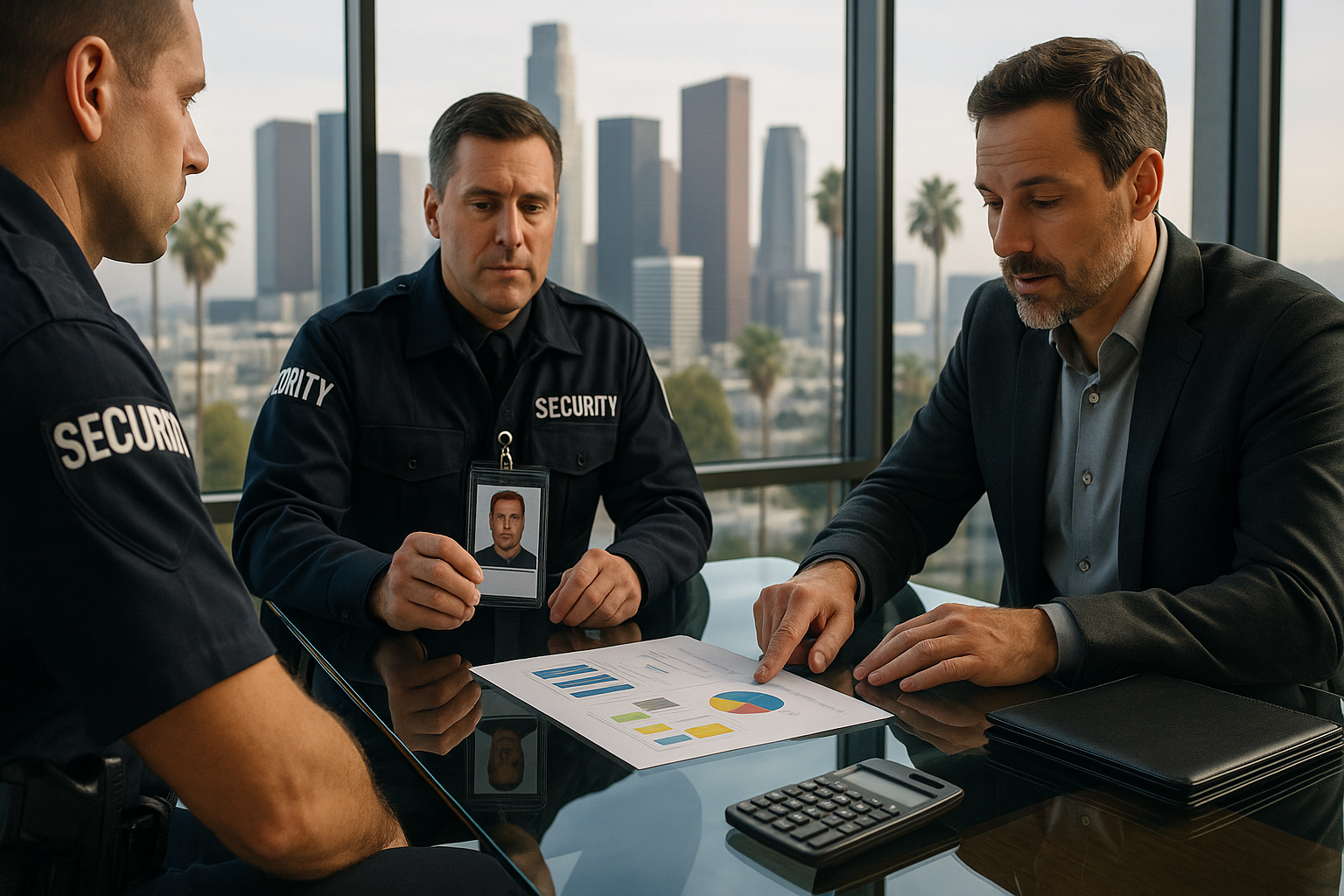
Hook: When a retail theft makes the regional news or a construction trailer disappears overnight, the question is not whether to act, but how to act without creating new liability. Hiring armed security guards in Los Angeles can protect people and property, but it brings regulatory hurdles, higher costs, and real legal responsibilities. Know what you are paying for, and what a licensed armed guard must have, before you sign the contract.
Introduction If you are considering armed security guards Los Angeles for a business, event, or property, this article explains the licensing steps, the real cost drivers, and practical hiring and contracting advice. You will learn what state and local requirements matter, how much different types of armed protection typically cost, and how to structure a safe, compliant arrangement that reduces risk without wasting money.
H2 Licensing and legal requirements for armed private security in California California regulates private security carefully. The state agency that matters is the Bureau of Security and Investigative Services. Any person carrying out security work must be properly registered, and an armed guard has additional qualifications beyond the basic registration.
To hire armed security legally you should confirm four core elements. First, the guard must hold a current state registration commonly called a guard card. That registration follows a criminal background check and Live Scan fingerprinting. Second, the guard must be legally eligible to possess a firearm in California, which means no disqualifying criminal convictions, certain mental health adjudications, or prohibitive restraining orders. Third, the guard must hold a separate armed guard permit from the state or proof of employer-sponsored firearms authorization, which includes classroom training and a live-fire qualification. Fourth, the employer or contracting agency must maintain appropriate insurance and meet local business license rules.
State rules change occasionally, so always verify current training hour and renewal requirements with the Bureau of Security and Investigative Services before hiring. Practical compliance for you means verifying paperwork, keeping copies on file, and confirming annual or periodic requalification, especially for firearm handling.
H3 What a compliant application looks like A compliant armed guard will present a current guard card, a firearms permit or certificate showing recent requalification, and the Live Scan background approval. They should also have documented training records for first aid and use of force, and an employer liability insurance certificate naming your business as an additional insured when requested. If you hire off-duty peace officers, verify any department policies and confirm they are permitted to use a firearm while on private duty.
H2 How much do armed security guards in Los Angeles cost? Expect significant variation. Pricing depends on risk, time of day, guard skill level, and whether you hire through an agency, an individual, or an off-duty officer. The following ranges reflect common market conditions in Los Angeles County.
- Basic armed security guard, private company: $35 to $65 per hour. This covers a licensed guard with standard training, typical for retail loss prevention or mobile patrols.
- Specialized armed guard, experienced or supervisory level: $60 to $95 per hour. Use this rate when the assignment requires high-risk posts, supervisory oversight, or additional certifications.
- Off-duty police officer: $85 to $150 per hour, sometimes higher depending on the agency, crowd risk, or overtime restrictions.
- Executive protection or close personal protection: $75 to $250 per hour, depending on the principal's profile and travel requirements.
These hourly rates can be higher for night shifts, holidays, or short-notice bookings. Many agencies impose minimum shift lengths, commonly four to eight hours, and charge travel or mileage when a post is remote.
H3 Real-world cost examples Example 1, small retail store: One armed guard for the night shift, five nights a week, at $45 per hour for an 8-hour shift will cost about $7,200 per month before taxes and agency fees. If you only need coverage three nights per week, you can expect roughly $4,320 per month.
Example 2, construction site: A mid-size construction site often needs 24/7 coverage. Two armed guards rotating 12-hour shifts might cost $45 per hour each, producing a monthly payroll cost near $64,800 before supervision, vehicle, and equipment charges.
Example 3, single-event security: For a high-profile evening event with 10 guards and one supervisor for six hours, using $60 per hour for guards and $90 per hour for the supervisor, the labor cost will be about $4,380 excluding site assessment fees, crowd control equipment, or overtime.
H2 What drives price up or down Location matters. High-crime neighborhoods, gated communities, or venues near entertainment districts typically demand higher rates. Time and scheduling influence cost: overnight shifts, weekend work, and holiday coverage usually increase pay due to premiums or mandatory overtime. Skill and licensure matter as well. Patrol guards and retail guards who are minimally equipped will cost less than guards who have specialized firearms training, crowd control experience, or supervisory responsibility. Off-duty police are often the most expensive option because departments bill for overtime and administrative overhead.
Additional cost drivers include equipment and logistics. Patrol cars, radios, body cameras, and firearms maintenance add expense. If the assignment requires an armored vehicle, K-9 units, or rapid response backups, expect substantial markups. Liability exposures also influence pricing. If the client requires the security firm to name the company as an additional insured or to carry a high level of general liability, the firm may pass premium costs on to the client.
H2 Agency versus direct hire versus off-duty police You can hire armed guards in three main ways: through a licensed security agency, by contracting an independent guard, or by contracting off-duty police officers.
Hiring through an agency gives you built-in verification, payroll compliance, and backup staffing. Agencies carry insurance and often supply uniforms and equipment. Their markup pays for supervision and administrative overhead. This is the safest route for larger or ongoing assignments.
Contracting an independent guard can reduce hourly rates, but you assume much of the liability risk. Independent guards may or may not carry adequate insurance or confirm ongoing licensing. If you go this route, obtain copies of licensing, Live Scan background approval, and both general liability and workers compensation certificates before the guard begins work.
Hiring off-duty police offers experience and training that many private guards cannot match, and they can be a strong deterrent. Departments often have strict rules and can charge premiums. Also consider potential public perception and the department's stance on use of force during private duties.
H2 Contracts, insurance, and liability that protect you A well-drafted contract reduces ambiguity and legal exposure. Insist on an explicit scope of work that defines duties, limits on use of force, arrest authority, and reporting obligations. Require the security firm to maintain general liability insurance with limits appropriate to the risk profile, to carry workers compensation, and to provide proof of being bonded if requested.
Include an indemnity clause that addresses negligence and willful misconduct. Require immediate notification of incidents and a complete incident report within a defined timeframe. Specify background screening standards and requalification timelines for firearms. If a guard injures someone or uses lethal force, your organization will face scrutiny, so clarity about who has authority and what the guard is authorized to do can limit your exposure.
H2 How to vet armed security guards in Los Angeles Do not accept photocopies without verification. Check the guard card number directly with the state bureau when possible. Ask for current firearms qualification certificates and training records from the past year. Confirm Live Scan or equivalent background check completion and ask about any pending charges or past convictions. A reputable agency will provide references and testimonials for similar assignments.
Ask scenario-based questions during vetting. For example, ask how the guard would respond to an active theft, an intoxicated aggressive patron, or a vehicle breach. Assess communication skills, command presence, and conflict de-escalation training. If the assignment involves interactions with the public, strong de-escalation skills reduce liability and often lower costs related to incidents.
H2 Practical tips to reduce cost without sacrificing safety You can lower costs by combining guards with technology. Video surveillance monitored off-site can reduce the number of onsite hours. Mobile patrols are less expensive than full-time static posts, especially for lower-risk properties. Cut coverage during low-risk periods, but confirm alarm and rapid response plans.
Consider a layered approach. Use unarmed guards for routine access control and a small number of armed supervisors who assist only during higher-risk periods or incidents. This reduces total firearm exposure while preserving a rapid armed response.
Negotiate minimums and long-term rates. Agencies often provide discounts for multi-site contracts or guaranteed long-term hours. Ask for transparency on overtime, supervisor rates, and equipment charges so you can compare true costs.
H2 Red flags to avoid Watch for missing or expired licensing, lack of insurance certificates, or vague contract language that shifts all liability to your company. Be wary of extremely low bids, because they often omit necessary insurance, rely on inadequately trained personnel, or expect you to accept subcontracting without consent. If an agency resists background verification or refuses to show training records, move on.
Conclusion Hiring armed security guards Los Angeles requires balancing safety, compliance, and cost. Start with a clear risk assessment, confirm state registration, firearms permits, and insurance, and choose the staffing model that matches your risk tolerance and budget. A carefully written contract, prudent vetting, and strategic use of technology will help you obtain effective protection without taking on unnecessary liability. If you are unsure about current training or licensing specifics, consult the Bureau of Security and Investigative Services or a qualified attorney before finalizing a contract.