
May 11, 2026
24/7 Security Guard Los Angeles - Reliable On-Demand Protection
Los Angeles does not sleep, and neither do its risks. Break-ins spike after closing time, construction materials disappear before sunrise, and a last-minute event can outgrow its crowd plan by midnight. When something goes wrong at 2 a.m.,
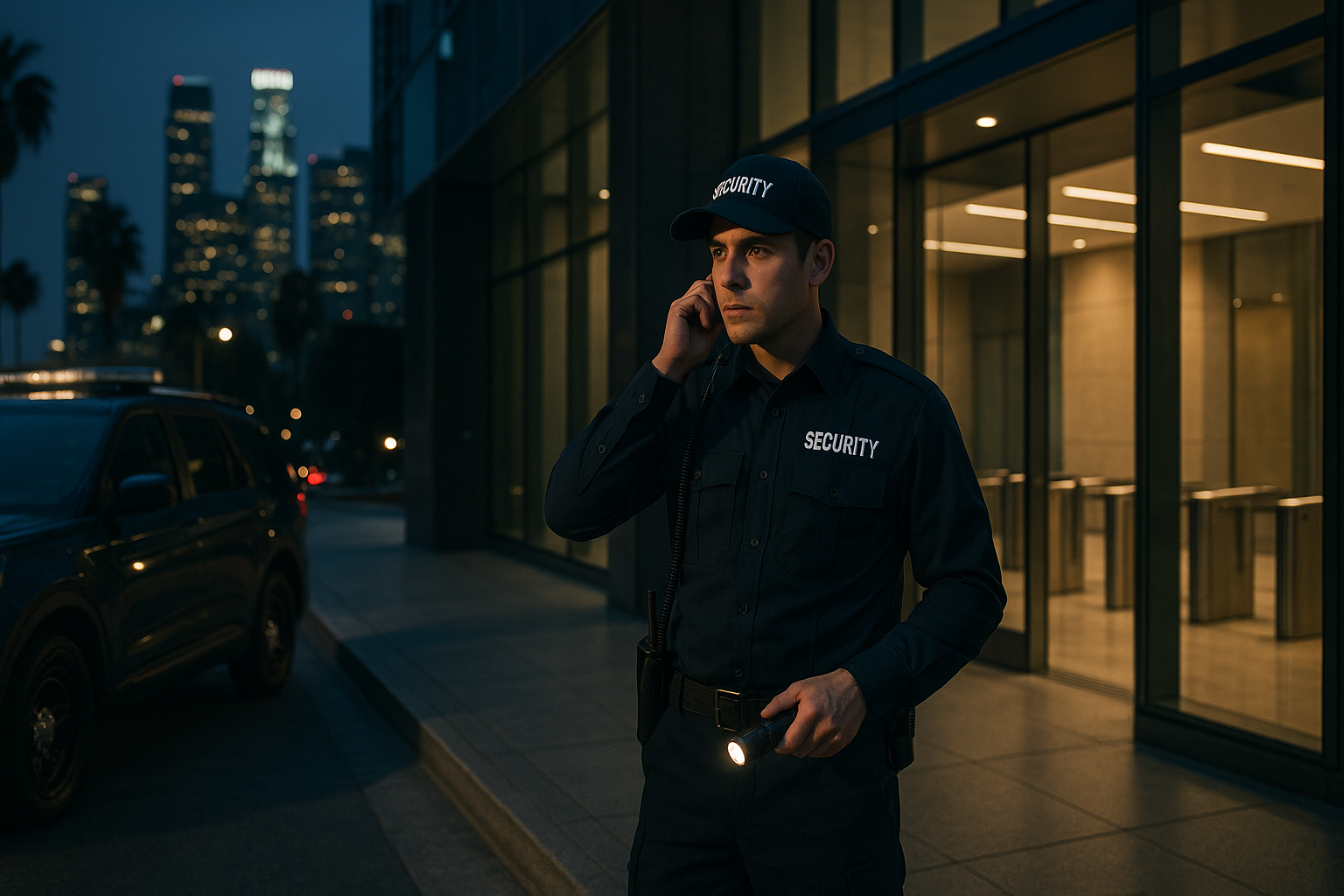
Los Angeles does not sleep, and neither do its risks. Break-ins spike after closing time, construction materials disappear before sunrise, and a last-minute event can outgrow its crowd plan by midnight. When something goes wrong at 2 a.m., you do not need a theory. You need a trained guard at your door, fast.
This guide explains what reliable 24/7 security looks like in Los Angeles, how on-demand response really works, and how to choose a provider who can stand up an effective post without guesswork. If you are searching for 24 7 security guard Los Angeles, you are likely facing a time-sensitive problem. Here is how to solve it with confidence.
Why Round-the-Clock Security Matters in Los Angeles
The city is a patchwork of high-traffic neighborhoods, industrial corridors, and destination venues. Risks shift hour by hour. Retail corridors in Hollywood see theft and vandalism after closing. Downtown loading docks become targets for trespassing once the day crews go home. Beachside properties face after-hours loitering. Film sets and special events draw attention that can escalate quickly without a visible presence.
Round-the-clock coverage does more than fill a schedule. It closes the security gaps that appear when staffing changes, alarms fail, or a property sits empty during off-hours. Consistent guard presence deters opportunistic crime, catches issues early, and keeps routine problems from turning into losses. A 24/7 plan is also practical insurance for business continuity. It keeps doors open and projects on track even when something unexpected happens.
What 24/7 Security Guard Service Really Includes
A capable Los Angeles provider does not just assign a person in a uniform. True 24/7 coverage connects people, procedures, and technology so your site gets the right response at any hour.
Core components typically include:
- Fixed posts for entrances, lobbies, docks, or gates. Guards control access, check credentials, greet visitors, and enforce policy.
- Mobile patrols that circulate through parking lots, alleys, rooftops, and perimeter zones. Patrols are effective for larger properties or when full-time posts are not feasible.
- Alarm response and after-hours unlocks. A patrol car meets the alarm company, investigates, resets, or escalates.
- Concierge or front-of-house presence in residential towers, hotels, and Class A offices, often paired with customer service training.
- Incident reporting with time-stamped notes, photos, and escalation to property contacts.
- Supervisor oversight, especially on nights and weekends. Rovers or duty managers inspect posts, coach guards, and solve problems on the spot.
The best programs knit these pieces together. A single property might combine a lobby post during business hours, patrols overnight, and on-call alarm response for off-site incidents.
On-Demand Protection in Los Angeles: How Rapid Deployment Works
On-demand means a provider can start quickly, often the same day. Speed matters, but the process still needs structure, or you risk a warm body who cannot actually protect your site.
Most strong providers follow a version of this sequence:
Intake and triage. A coordinator gathers the basics, such as address, start time, property type, risks, points of contact, access needs, and special instructions. They determine whether the post requires an armed or unarmed guard, a patrol car, or a supervisor.
Quick assessment. If time allows, a supervisor visits the site or conducts a video walk-through. For emergencies, they review site maps, previous incident reports, and any camera views you can share.
Post orders. The provider drafts concise orders that cover duties, patrol routes, reporting cadence, key control, and emergency steps. Even a one-page plan beats ad hoc instructions at the curb.
Dispatch and arrival. The assigned guard or team receives the post orders, a briefing on hazards and contacts, and any keys or access credentials. You get an ETA and the guard’s name.
Stabilization and oversight. In the first shift, a supervisor checks in, verifies logins, tests radios or phones, and confirms reporting works. Any safety gaps, like busted lighting or broken locks, are flagged immediately.
This playbook turns a rushed request into reliable protection. It is what separates true on-demand coverage from a number on a jacket.
Types of Guards and Specialties You Can Source 24/7
Different risks call for different skills. In Los Angeles, a single provider often runs multiple specialties so you can scale up or pivot as your needs change.
Armed vs. unarmed. Armed guards deter higher-risk threats and may be required for sites with valuable inventory, cash handling, or recent violent incidents. Unarmed guards are a fit for access control, concierge, low-risk patrols, and policy enforcement. In California, armed guards must hold the BSIS exposed firearm permit in addition to the basic guard card.
Construction and industrial. These guards focus on perimeter checks, tool and material verification, contractors’ access, and after-hours trespass prevention. Copper theft and fuel siphoning are common risks, so patrol routes and vehicle proximity matter.
Retail and loss prevention. Visibility deters theft. Trained guards watch entrances, manage fitting rooms, coordinate with store managers, and maintain a calm presence during returns or confrontations. Some roles pair with plainclothes loss prevention associates.
Residential and HOA. Common duties include gatehouse control, guest registration, amenity checks, and garage patrols. Good residential guards blend security awareness with hospitality.
Hospitality and venues. Hotels, clubs, and arenas need professional presence, bag policies, and ejection protocols that reduce liability. Crowd management and de-escalation are essential.
Film and TV production. Production security locks down set perimeters, manages celebrity privacy, and controls access to basecamps and equipment. These teams understand crew call sheets, sensitive locations, and the need for discretion.
Healthcare. Hospital and clinic posts require empathy, privacy awareness, and fast escalation paths. Guards manage visitor flow, keep staff safe, and support crisis response procedures.
Fire watch. When a fire alarm or sprinkler system is offline, the Los Angeles Fire Department may mandate a dedicated fire watch. Guards must walk designated routes, document intervals, and call in hazards without delay.
Licensing, Training, and Compliance in California
If you need 24/7 coverage in Los Angeles, you also need compliance. California regulates private security through the Bureau of Security and Investigative Services, commonly called BSIS.
Every guard must hold a valid BSIS guard card. This includes initial training and ongoing continuing education. Armed guards must also hold the exposed firearm permit and complete range qualifications. Additional permits apply to items like batons or pepper spray. Reliable companies verify credentials before assignment and keep copies on file.
Insurance is not a nicety. Ask for a certificate of insurance that lists your entity as an additional insured with adequate general liability and workers’ compensation. Some properties also require auto liability if patrol vehicles will be used on-site.
Post orders and documentation protect you. Proper incident reports, visitor logs, and time-stamped patrol records can make the difference if an insurance claim or legal question arises. Providers that invest in reporting discipline save clients headaches later.
Local rules matter as well. Fire watch must meet LAFD requirements. Film permits specify perimeter and hours. Some business districts have bylaws for access control. A savvy provider knows how to work within those constraints.
Technology That Elevates Guard Performance
Good security blends people with tools. In Los Angeles, where properties can sprawl and incidents move fast, technology keeps coverage tight and transparent.
GPS tour tracking proves that guards walked the right routes at the right times. NFC tags or QR codes placed at key points verify presence without slowing patrols down. Live reporting platforms let guards upload photos, notes, and incident reports from a phone. You see what they see and can respond quickly.
Body-worn cameras can reduce false claims and improve evidence quality, though they require clear policies for privacy and data retention. Two-way radios or push-to-talk apps keep guards connected to supervisors and property teams without relying solely on cellular calls. Integration with access control and camera systems adds another layer. For example, a guard watching a camera feed can redirect a patrol to intercept a trespasser instead of discovering damage later.
Ask providers to demonstrate their tools. A short live demo, even over a video call, reveals how well the system supports guards in the field.
Cost Factors and Realistic Budgets in Los Angeles
Pricing varies, but a few drivers show up on every quote.
Risk level and guard type. Higher-risk posts and armed coverage cost more than standard access control. Specialized roles like healthcare or executive protection sit at the top end.
Schedule and overtime. California’s labor rules trigger daily overtime after eight hours and double time after twelve. Long single-guard shifts can raise costs. Rotating shifts with overlapping coverage may be more efficient.
Location and parking. Hard-to-access areas, paid parking, or long walks from staging areas can add time and supervision needs.
Short notice and holidays. Emergency call-outs, holiday coverage, and last-minute changes often include surge rates. Planning a week ahead, when possible, keeps costs stable.
Technology and vehicles. Patrol cars, body cameras, or dedicated tablets add to the hourly rate. Some companies roll these costs into a flat program fee.
Without naming exact figures for every situation, unarmed guards in Los Angeles often fall in the mid to high twenties per hour for planned daytime posts, rising through the thirties for nights and weekends. Armed coverage and specialized assignments can extend into the forties or fifties per hour, sometimes higher for executive protection or very high-risk environments. Emergency, single-night, or short-duration requests tend to price at the upper end due to staffing logistics. The best way to manage budget is to match coverage to risk, then lock in a schedule that avoids daily overtime.
How to Choose a 24/7 Provider You Can Trust
A trustworthy company will be transparent about staffing depth, supervision, and response times. They will not promise a thirty-minute arrival to every corner of the county if they cannot deliver.
Ask how they recruit and schedule for last-minute posts. Look for an active bench of on-call guards and a clear supervision model. Ask to see sample post orders and incident reports. If they use technology, request a live look at their guard tour or reporting app. Confirm BSIS licensing, insurance limits, and firearm permits if armed coverage is in scope. Ask for references that match your property type, not just generic testimonials.
Watch for red flags. Vague answers about training, pressure to sign long contracts before a site visit, or a quote that is far below market without a convincing reason all warrant caution. A provider who shows you how they do the work, instead of only telling you they can, is more likely to perform.
Example Scenarios and What Effective Response Looks Like
Retail break-in after hours. A boutique in West Hollywood experiences a smash-and-grab at 1:30 a.m. After police clear the scene, the owner needs overnight protection while the glass is replaced. A capable provider dispatches a guard within 90 minutes, sets a perimeter inside the store, controls access for the emergency board-up crew, and photographs any additional damage for the insurance file. A second guard arrives at opening to manage customer flow during repairs.
Construction site theft. A project near the Arts District loses copper piping over a weekend. The property manager requests night patrols and a gate post. The provider writes post orders that include perimeter checks every 30 minutes, logs of contractor vehicles in and out, and a new lighting check list. Within a week, the visible presence and tighter access controls stop the theft.
Film set crowd management. A production schedules an exterior shoot in Koreatown. Security establishes a perimeter before dawn, coordinates with location managers, keeps sidewalks open for residents, and gently redirects fans away from sensitive areas. Guards are briefed on call sheet changes and confidentiality. The day wraps with no interruptions or complaints.
Fire watch at a hotel. A high-rise has a sprinkler impairment after a burst pipe. LAFD requires a continuous fire watch until the system comes back online. A trained guard walks assigned routes at fixed intervals, keeps a detailed log, and calls any smoke or hazard immediately to the designated contact and 911 if needed. The property remains open, compliant, and safe.
Prepare Your Site for Guard Success
Even the best guard performs better with a clear plan and basic resources. Offer a quick site brief on arrival. Share key contacts, alarm codes, and a tour of critical areas. Point out hazards like unlit stairwells or broken locks. If possible, print or email simple post orders that list duties, patrol routes, and when to escalate.
Keys and access credentials should be ready at the start of the shift. A shared phone line or radio channel for the property team speeds up decisions. If the post will last more than a day, schedule a short check-in with a supervisor to correct any early friction. These small steps make a visible difference in the first 24 hours of coverage.
When to Combine Guards with Cameras and Remote Monitoring
Guards excel at presence, judgment, and customer interaction. Cameras excel at coverage and recording. Blending the two can cut risk and cost.
For example, a warehouse might run a single overnight guard who performs inside patrols while a remote monitoring center watches exterior cameras. If a person approaches a fence line, the remote operator alerts the guard and announces over a speaker. The intruder usually leaves before any damage occurs. In a residential tower, a friendly lobby guard handles guests while cameras provide full garage visibility. Integration means quicker responses and better evidence if an incident occurs.
A good provider will help you decide how to mix these tools based on your site map, blind spots, and budget.
A Short Word on Response Times
Los Angeles traffic is real, and night shifts can stretch resources. Honest providers will share realistic arrival windows, often 2 to 4 hours for non-emergency short notice within core service areas. Some maintain dedicated rovers to handle faster calls. If you consistently need sub-two-hour response, consider a standing contract that reserves staff for your properties. It stabilizes timing and lowers stress when the unexpected happens.
The Promise Behind 24 7 Security Guard Los Angeles
The phrase 24 7 security guard Los Angeles signals urgency. It also implies trust. You are counting on a company to put trained people between your assets and a problem, at any hour, with professionalism that reflects on your brand.
Choose partners who build structure into speed. Look for clear post orders, real supervision, verifiable training, and technology that keeps you informed. Match guard type to risk. Prepare your site for the first shift. With those pieces in place, on-demand protection becomes more than a scramble. It becomes a reliable extension of your team, day and night.
A calm, capable guard at 2 a.m. changes everything. If you need coverage now, gather your address, contact numbers, risk summary, and access details, then call a licensed Los Angeles provider that can brief, dispatch, and supervise without delay. The right response, delivered quickly, is the difference between a long night and a solved problem.